History of the Internet: From ARPANET to Web 3.0
Published: 3 May 2026
I remember the first time I learned how the internet began, and the story surprised me. The internet started in 1969 when the U.S. Department of Defense created ARPANET to help computers share information.
By the 1990s, millions of people were connected from their homes and offices. Today, over 5 billion people use the internet every day to work, learn, and play. When you trace these steps, you see more than technology and realize how one network changed the entire world.
In this blog, I will take you through the complete history of the internet, starting right from the very beginning.
Internet Beginnings
The origin of the internet shows how a simple idea of connecting computers grew into a global network used by billions of people. It began as a small research project and slowly expanded through new technologies and innovations.
Over time, the internet has changed communication, business, education, and daily life. This history helps explain how the modern digital world developed step by step.
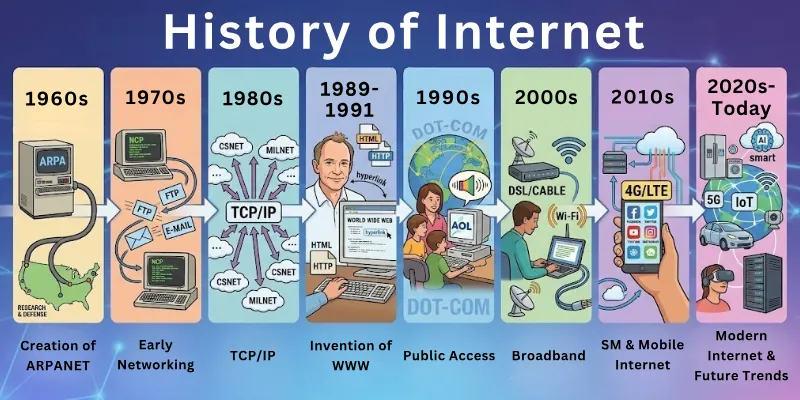
Key stages in the evolution of the internet:
- The Creation of ARPANET (1960s)
- Early Networking and Protocols (1970s)
- The Rise of TCP/IP and Network Expansion (1980s)
- The Invention of the World Wide Web (1989–1991)
- The Internet Boom and Public Access (1990s)
- Broadband, Wi-Fi, and Faster Connections (2000s)
- Social Media and Mobile Internet Growth (2010s)
- The Modern Internet and Future Trends (2020s–Today)
Each stage is explained clearly so you can follow it step by step.
1. The Creation of ARPANET
The internet began as a military research project in the United States. In 1969, the U.S. Department of Defense created ARPANET to allow computers to communicate and share information across long distances.
Initially, only four computers were connected, but the network demonstrated that machines could exchange data reliably. ARPANET introduced packet switching, which broke messages into smaller units for faster transmission. This innovation set the foundation for all modern networking.
- First Nodes: UCLA, Stanford, UCSB, and the University of Utah connected
- Packet Switching: Data is sent in small packets instead of one big message
- Resource Sharing: Computers could access each other’s files and programs
- Experimental Network: Designed for testing and research purposes
2. Early Networking and Protocols
During the 1970s, more research centers created their own networks, inspired by ARPANET. Engineers developed early protocols to standardize communication between different systems. Email emerged as the first widely adopted application, allowing fast messaging between connected computers.
Networks were still small and primarily academic, but they proved the potential of digital communication. The decade focused on making networks more reliable and organized.
- Standard Rules: Protocols like NCP set communication standards
- Email Introduced: Became the first popular network service
- University Networks: Expanded networking beyond military research
- Reliable Messaging: Ensured accurate delivery of data
3. The Rise of TCP/IP and Network Expansion
The 1980s marked a major step forward with the adoption of TCP/IP, a protocol suite that allowed diverse networks to interconnect. On January 1, 1983, ARPANET officially switched to TCP/IP, creating the first fully standardized network.
Networks expanded to government institutions and private companies, increasing connectivity. This period made communication between different systems easier and more consistent. The groundwork was laid for the global internet.
- TCP/IP: Universal protocol for connecting multiple networks
- Standardization Date: January 1, 1983, marked the official transition
- Broader Adoption: Beyond universities, including government and business networks
- Interoperability: Different computers could communicate seamlessly
4. The Invention of the World Wide Web
In 1989, Tim Berners-Lee created the World Wide Web at CERN to simplify access to information. The system used hyperlinks, web pages, and browsers, making navigation user-friendly. By 1991, the first websites went live, enabling non-experts to use the internet.
The Web transformed the internet into a global platform for information, communication, and commerce. This innovation was the turning point that brought the internet to the general public.
- Hyperlinks & Pages: Made information easily navigable
- Web Browsers: Enabled visual and interactive access to data
- Public Access: First websites available beyond research labs
- Global Platform: Introduced widespread communication and content sharing
5. The Internet Boom and Public Access
In the 1990s, the internet moved from research labs to homes and businesses around the world. Commercial internet service providers (ISPs) made access widely available, and personal computers became more common. Websites, search engines, and email became popular tools for work, education, and entertainment.
Online communities and forums started connecting people with shared interests. The internet quickly became part of everyday life, shaping how people communicated and accessed information.
- ISPs: Companies provide internet service to homes and offices
- Popular Websites: Early portals and search engines emerged
- Email Expansion: Became a common tool for communication
- Online Communities: Forums and chat rooms connected users
6. Broadband, Wi-Fi, and Faster Connections
The 2000s brought faster internet with broadband connections and Wi-Fi technology. Users could access the internet without long dial-up delays, making video, audio, and large files more accessible. Businesses and schools relied on the internet for communication and collaboration.
Home networks and wireless access became standard, allowing multiple devices to connect easily. This era transformed the internet into a high-speed, always-on utility for millions.
- Broadband: Replaced slow dial-up connections
- Wi-Fi: Enabled wireless access in homes, offices, and public spaces
- Multimedia Use: Video, audio, and large files became easier to share
- Everyday Access: The Internet became essential for work, learning, and entertainment
7. Social Media and Mobile Internet Growth
The 2010s saw the rise of smartphones and social media, making the internet more personal and interactive. Platforms like Facebook, Twitter, and Instagram connected billions of users worldwide. Mobile apps allowed people to work, shop, and communicate from anywhere.
Streaming services and cloud storage changed how users consume media and store information. The internet became a platform not just for information but also for social interaction, entertainment, and commerce.
- Social Media: Connected billions through platforms like Facebook and Instagram
- Mobile Access: Smartphones enabled internet on the go
- Streaming & Cloud: Media and storage moved online
- Interactive Internet: Users created, shared, and collaborated
8. The Modern Internet and Future Trends
Today, the internet connects over 5 billion people and continues to grow with advanced technologies. High-speed mobile networks like 5G, AI-driven services, and the Internet of Things (IoT) are shaping daily life.
E-commerce, remote work, and online learning have become standard practices. Security and privacy challenges have also become central concerns. The modern internet is faster, more accessible, and increasingly integrated into every part of human activity.
- 5G and High-Speed Networks: Enable instant access and data transfer
- AI and Smart Services: Personalize and automate tasks online
- IoT Devices: Connect homes, cars, and workplaces
- Security Focus: Privacy and cybersecurity are critical concerns
Important Internet Technologies in History
The internet did not grow overnight; it evolved gradually through innovations that improved communication, information sharing, and connectivity. Early experiments in networking laid the groundwork for a system that could link computers across the world.
Each advancement built on the last, creating the foundation for the digital world we experience today. Essential internet technologies are:
- Packet Switching: Broke data into small units for faster, more efficient transmission
- TCP/IP Protocol: Standardized communication between different networks
- Email: One of the first widely used applications for messaging
- World Wide Web: Introduced hyperlinks, browsers, and web pages for easy access
- Web Browsers: Made navigation visual and user-friendly
- Search Engines: Allowed users to find information quickly
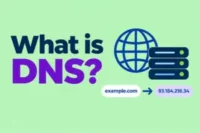
- DNS (Domain Name System): Translates web addresses into IP numbers
- Routers & Switches: Direct internet traffic efficiently between networks
- Wi-Fi & Broadband: Enabled faster, always-on internet connections
- Fiber Optic Networks: Allowed extremely fast data transfer over long distances
- Mobile Internet: Internet access through smartphones and tablets
- Cloud Computing: Store and access data over the internet
- VoIP (Voice over Internet Protocol): Enabled phone calls over the internet
- Streaming Technology: Supported video and music delivery online
- Peer-to-Peer (P2P) Networks: Allowed file sharing directly between users
- Virtual Private Networks (VPNs): Provide secure and private internet connections
- Content Delivery Networks (CDNs): Speed up website and video delivery worldwide
- Web 2.0 Technologies: Enabled interactive websites, blogs, and user-generated content
- IoT Protocols: Connect smart devices to the internet seamlessly
- Social Media Platforms: Enabled interaction, content sharing, and global connectivity
Milestones and Statistics in Internet History
The development of the internet is full of milestones that mark its growth from a small research network to a global communication system. Each milestone reflects a significant advancement in technology, adoption, or accessibility.
Today, statistics show the internet’s enormous scale, including billions of users and countless online services. These milestones and numbers show the impact of the internet’s invention.
Key milestones and statistics include:
- 1969: ARPANET sends its first message between UCLA and Stanford
- 1971: The first email is sent
- 1983: ARPANET switches to TCP/IP, creating the foundation of the modern internet
- 1991: The World Wide Web is introduced to the public
- 1995: Internet reaches 16 million users worldwide
- 2000: Number of websites surpasses 17 million
- 2005: Social media platforms gain mass popularity
- 2010: Over 2 billion people use the internet
- 2020: More than 4.5 billion internet users worldwide
- 2023: Over 1.2 billion websites and counting
- 2025: Around 6 billion people, about three‑quarters of the global population, are online, with billions more remaining offline
The Current State of the Internet
The internet has grown into a vast network that has become an essential part of life for billions of people worldwide. It connects individuals, businesses, and governments and provides access to information, entertainment, and services in real time.
Today, the internet is not just a tool; it defines culture, business, education, and even entertainment habits. Its presence is visible in homes, workplaces, schools, and even public spaces, making it an indispensable part of modern society.
- Mobile Dominance: Most people access the internet through smartphones, making mobile-friendly content essential.
- Social Media: Platforms like Facebook, Instagram, TikTok, and YouTube lead online engagement and content sharing.
- E-Commerce Growth: Online shopping and digital payment systems help people buy and sell products easily.
- Streaming and Entertainment: Video streaming, online games, and live content generate huge internet traffic worldwide.
- Cloud Services: Cloud storage and online tools allow businesses and students to store files and work from anywhere.
- Cybersecurity Concerns: Hacking, phishing, and data breaches challenge users and organizations every day.
Future of the Internet
The internet will continue to grow and play an even bigger role in everyday life. It will open new opportunities for learning, business, and creativity around the world. People will rely on it more to solve problems, share ideas, and stay connected.
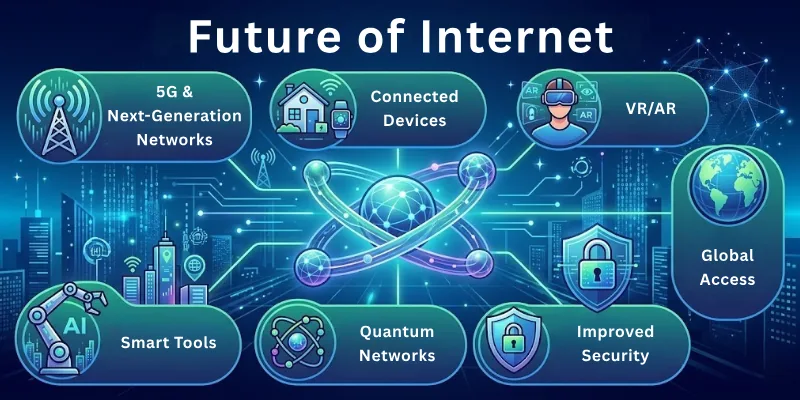
The internet of the future will make life faster, easier, and more connected than ever before. It will also bring new ways to explore, create, and experience the world online.
- 5G and Next-Generation Networks: Faster mobile networks will improve streaming, video calls, and online gaming.
- Smart Tools: Intelligent tools will help people search, learn, and manage tasks more efficiently.
- Connected Devices (IoT): More devices like smart homes, wearables, and cars will connect to the internet.
- Virtual and Augmented Reality (VR/AR): People will experience learning, shopping, and games in immersive ways.
- Quantum Networks: Future networks may provide faster and more secure data transfer.
- Improved Security: New methods will protect personal data and prevent online attacks.
- Global Access: Efforts will continue to bring the internet to remote areas and underdeveloped countries.
Conclusion
Dear readers, here we explored the history of the internet and saw how it evolved. We started with ARPANET and moved through early networking protocols, TCP/IP, and the World Wide Web. We also saw how the internet expanded in the 1990s with public access, how broadband and Wi-Fi improved speed and connectivity, and how social media and mobile internet connected the world.
This blog provides a step-by-step, complete, and updated overview, helping you understand the past, present, and future of the internet. Through milestones and statistics, we saw how fast the internet has grown and how billions of people use it every day.
Don’t ignore the FAQs below; they provide even more interesting insights into the internet’s evolution.
FAQs: History of the Internet
I’ve shared the frequently asked questions about the invention of the Internet.
The internet became available to the public in the early 1990s. Before that, it was mainly used by researchers and the military. In 1991, the World Wide Web was introduced, allowing anyone with a computer to access information online. This marked the start of widespread public use.
The internet was not invented by a single person. It was developed over time by many engineers and scientists. Key figures include Vint Cerf and Bob Kahn, who designed the TCP/IP protocols that connect networks. Their work in the 1970s laid the foundation for the modern internet.
The internet itself is not “owned” by anyone, so it doesn’t have a single price.
- However, the global digital economy powered by the internet is worth trillions of dollars today.
- E-commerce, online services, advertising, and cloud computing contribute massively to its value.
Estimates in 2025 suggest the internet-driven economy may exceed $6 trillion globally.
By the mid-1990s, the internet reached homes as ISPs offered access, and personal computers became affordable. Dial-up connections let millions go online, and by the late 1990s, they had become part of daily life in many countries.
The first users were researchers, scientists, and military personnel. ARPANET connected four U.S. universities in 1969 for experimental purposes. These users tested sharing files and communicating over long distances. It was mostly restricted to academic and defense networks for over a decade.
Vint Cerf is called the “father of the Internet.” He, along with Bob Kahn, created the TCP/IP protocols. These protocols allow different computer networks to communicate seamlessly. Cerf’s work in the 1970s is considered the backbone of today’s global internet.
The internet was originally designed for military communication. ARPANET allowed the U.S. Department of Defense and researchers to safely share data between computers. The focus was on reliability and efficiency, not public access.
The internet has existed for over 50 years. It started in 1969 with ARPANET. Over the decades, it evolved through protocols, the World Wide Web, and mobile technologies. Today, billions of people around the world use it daily.



- Be Respectful
- Stay Relevant
- Stay Positive
- True Feedback
- Encourage Discussion
- Avoid Spamming
- No Fake News
- Don't Copy-Paste
- No Personal Attacks
- Be Respectful
- Stay Relevant
- Stay Positive
- True Feedback
- Encourage Discussion
- Avoid Spamming
- No Fake News
- Don't Copy-Paste
- No Personal Attacks
