ISPs in the United States: Better Internet Starts Here
Published: 21 May 2026
If your internet slows down right when you need it most, you are not alone in facing this. I have seen many users struggle with internet service providers in the United States that promise high speed but fail during use. Some people cannot even figure out why their bills keep changing.
In this blog, we will explore ISPs in the United States, what causes these issues, and how you can avoid wasting money on the wrong plan. You will also learn what to check before signing up so your internet actually matches your needs.
Let’s break down the important list.
List of ISPs in the United States
The United States has a wide range of internet service providers that differ by region, speed, and technology. Some companies operate nationwide, while others serve only specific cities or rural areas.
Below is a list of internet providers in the United States.
1. Major National ISPs
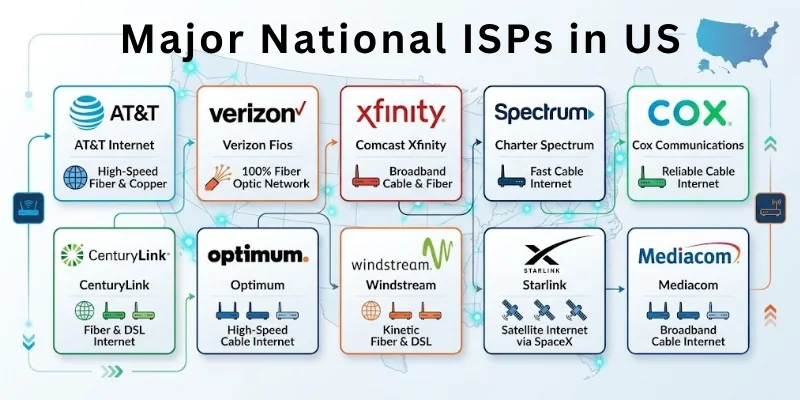
- AT&T Internet
- Verizon Fios
- Comcast Xfinity
- Charter Spectrum
- Cox Communications
- CenturyLink (Lumen Technologies)
- Optimum (Altice USA)
- Frontier Communications
- Windstream
- T-Mobile Home Internet
- Starlink (SpaceX)
- Mediacom
2. Regional and Fiber ISPs
- Google Fiber
- Astound Broadband
- Sparklight
- TDS Telecom
- Consolidated Communications
- WOW! Internet (WideOpenWest)
- Vyve Broadband
- Breezeline
- Armstrong
- Shentel (Glo Fiber in some regions)
- C Spire Fiber
- Ziply Fiber
- Metronet
- Sonic Internet
- EPB Fiber Optics
- RCN
3. Rural and Local ISPs
- HughesNet
- Viasat
- Rise Broadband
- Nextlink Internet
- Frontier rural services
- Local municipal fiber networks
- Golden West Telecommunications
- Ritter Communications
- Various rural electric cooperative ISPs
4. 5G and Wireless Home Internet ISPs
- Verizon 5G Home Internet
- AT&T Internet Air
- UScellular Home Internet
- Dish Wireless
5. Emerging and Future ISPs
- Amazon Project Kuiper (planned satellite internet service)
Important Note: ISPs in the United States are location-based. Some operate nationwide, while others serve specific cities, states, or rural areas, so availability depends on where you live.
The following details explain U.S. broadband providers one after another.
Major National ISPs
Major ISPs serve large areas and provide internet to millions of users. These providers offer multiple connection types like fiber, cable, and wireless services.
These are the main ISPs that play a key role in internet access across the U.S.
1. AT&T Internet
AT&T Internet provides home internet using both fiber and DSL networks. It is known for stable connections in many urban areas. Many households choose it for regular daily internet use.
- Offers fiber and DSL connection types
- Provides consistent speed on fiber plans
- Includes WiFi equipment in many plans
- Suitable for streaming and video calls
- Allows account management through the app or the web
Coverage Area
AT&T Internet is available in many states, mostly in cities and nearby areas. Fiber access is limited, so some locations rely on DSL service.
Price Level and Packages
- Fiber plans usually start from around $55 per month
- Mid-tier plans cost around $65 to $80 per month
- High-speed fiber plans can go up to $150 or more
- Fiber plans often include no extra equipment fees
Advantages of AT&T Internet
- Fiber service gives a stable internet speed
- No long-term contract in most plans
- Works well for daily home usage
Disadvantages of AT&T Internet
- Fiber connections do not reach every region yet
- DSL feels slow for modern needs
- Prices may increase over time
2. Verizon Fios
Verizon Fios is a fiber-based internet service. It delivers strong and stable performance for high data usage. It is often used in areas where fiber infrastructure is well developed.
- Uses a fiber network for data transfer
- Offers equal upload and download speed
- Maintains a stable connection during peak time
- Includes router options
- Handles gaming and streaming smoothly
Coverage Area
Verizon Fios operates in limited regions, mainly in the Northeast. It is not available in many central and western areas.
Price Level and Packages
- Entry plan (300 Mbps) starts around $49.99 per month
- The mid-tier plan (500 Mbps) costs around $74.99 per month
- Gigabit plans cost around $89.99 or more
- Price usually stays fixed for several years
Advantages of Verizon Fios
- High speed with stable performance
- No contract requirement
- Works well for heavy internet use
Disadvantages of Verizon Fios
- Limited service availability
- Installation not available in all areas
- Higher cost for top plans
3. Comcast Xfinity
Comcast Xfinity is a cable internet provider with a large user base. It offers many plan options for different types of users. It is commonly available in both cities and towns.
- Uses a cable network for internet service
- Provides multiple speed options
- Offers bundle services with TV
- Gives access to public WiFi hotspots
- Allows plan upgrades anytime
Coverage Area
Xfinity is available in many parts of the United States. It covers a large number of residential areas compared to other providers.
Price Level and Packages
- Promo plans start from around $35 to $50 per month
- Standard plans range from $70 to $90 after the promo period
- High-speed plans can reach $100 or more
- Extra fees for equipment can increase the total cost
Advantages of Comcast Xfinity
- Available in many locations
- Wide range of plan options
- Public WiFi access included
Disadvantages of Comcast Xfinity
- Speed drops during peak hours
- Extra charges increase the total bill
- Upload speed is lower than the fiber speed
4. Charter Spectrum
Charter Spectrum provides cable internet with a simple plan structure. It focuses on unlimited data usage for home users. It is often chosen where fiber service is not available.
- Uses a cable connection for the internet
- Offers unlimited data usage
- Provides a modem without extra cost
- Includes basic security features
- Suitable for streaming and browsing
Coverage Area
Spectrum is available in many suburban and rural areas. It is a common option where other high-speed services are limited.
Price Level and Packages
- Entry plans start around $30 to $50 per month
- Standard plans cost around $70 after the first year
- Gig plans can reach around $100 per month
- The price usually increases after the first year
Advantages of Charter Spectrum
- Unlimited data in all plans
- Simple pricing structure
- Available in many regions
Disadvantages of Charter Spectrum
- Speed varies during busy times
- Price increases after the first year
- Limited plan variety
5. Cox Communications
Cox Communications provides cable internet with a wide range of speed options. It focuses on flexible plans for different customers. Many households use it where fiber service is limited.
- Uses cable network with multiple speed tiers
- Offers add-ons like WiFi and bundle services
- Provides upgrade options for higher speeds
- Includes security tools in some plans
- Suitable for streaming and gaming
Coverage Area
Cox operates in several states, mainly in urban and suburban areas. It is often available where other providers have limited reach.
Price Level and Packages
- Plans usually start around $50 per month
- Standard plans range from $55 to $115 per month
- Higher speed plans can go beyond $150 per month
- Extra cost may apply for unlimited data or add-ons
Advantages of Cox Communications
- Wide range of speed options for users
- Good availability in many regions
- Flexible plans with upgrade options
Disadvantages of Cox Communications
- Many plans have a monthly data limit
- Price increases after promo period
- Higher cost compared to fiber options
6. CenturyLink (Lumen Technologies)
CenturyLink provides internet through fiber and DSL services. It focuses on simple plans with stable pricing. Many users choose it for steady monthly billing.
- Offers both fiber and DSL connections
- Provides unlimited data in most plans
- Uses the price-for-life model in some areas
- Includes a modem in certain plans
- Works well for basic to moderate use
Coverage Area
CenturyLink is available in many states, including rural and suburban areas. Fiber coverage is limited compared to DSL.
Price Level and Packages
- Plans usually start around $50 to $55 per month
- Fiber plans range from $75 to $130 per month
- DSL plans cost less but offer lower speeds
- No contract and no data caps in most plans
Advantages of CenturyLink
- Simple pricing with no sudden changes
- Unlimited data included in plans
- No long-term contract required
Disadvantages of CenturyLink
- DSL speed is quite slow
- Fiber not available in many areas
- Limited high-speed options
7. Optimum (Altice USA)
Optimum provides cable and fiber internet services. It offers high-speed plans with different speed ranges. It is often used in densely populated regions.
- Provides both cable and fiber internet
- Offers high-speed plans up to gig levels
- Includes WiFi equipment in many plans
- Allows bundling with TV services
- Suitable for heavy internet usage
Coverage Area
Optimum mainly serves areas in the Northeast and parts of the South. Its availability is limited compared to national ISPs.
Price Level and Packages
- Entry plans start around $40 to $60 per month
- Mid-tier plans range from $70 to $100 per month
- Gig plans can go above $100 per month
- Price may increase after the promotional period
Advantages of Optimum
- High-speed plans available in many areas
- Good option for streaming and gaming
- Bundle options with other services
Disadvantages of Optimum
- Price increases after the initial period
- Limited availability outside key regions
- Customer experience varies by location
8. Frontier Communications
Frontier Communications provides fiber and DSL internet services. It focuses on expanding fiber coverage in many areas. It is often used where other fiber providers are not available.
- Offers fiber and DSL internet services
- Provides high-speed fiber plans
- Includes unlimited data in most plans
- No contract required in many plans
- Works well for streaming and home use
Coverage Area
Frontier operates in around 25 states, mostly in suburban and rural regions. Fiber service is growing, but not available everywhere.
Price Level and Packages
- Plans start around $29.99 per month
- Standard fiber plans range from $50 to $80 per month
- High-speed plans can go up to $150 or more
- No data caps in most plans
Advantages of Frontier Communications
- Affordable entry-level pricing
- Strong fiber speed where available
- No data limits in most plans
Disadvantages of Frontier Communications
- Service quality depends on location
- The DSL option is slow in some areas
- Fiber service is still expanding to new areas
9. Windstream
Windstream provides DSL and fiber internet in many rural and suburban areas. It focuses on offering affordable entry plans and higher-speed fiber where available. It is often used in places where major cable providers do not operate.
- Offers DSL and fiber internet services
- Fiber plans support high-speed symmetrical internet
- No data caps on most plans
- Available in selected rural and mid-size areas
- Includes optional security and WiFi add-ons
Coverage Area
Windstream operates in around 18 states, mainly in rural and smaller communities. Fiber availability is expanding but still limited in many locations.
Price Level and Packages
- DSL plans start around $24.99 per month
- Mid-fiber plans range from $45 to $55 per month
- Gigabit fiber plans cost around $75 to $100 per month
- Some plans include price-lock options
Advantages of Windstream
- Affordable entry-level internet plans
- No data limits on most services
- Fiber offers strong, high-speed performance
Disadvantages of Windstream
- DSL speeds are very limited
- Fiber is not available everywhere
- Service quality varies by location
10. T-Mobile Home Internet
T-Mobile Home Internet uses 5G and LTE networks to deliver wireless internet to homes. It is a simple plug-and-play service with no complex installation. It is popular in areas with strong mobile coverage.
- Uses 5G and LTE wireless networks
- Simple setup with an included gateway device
- Unlimited data in all plans
- No annual contracts required
- Works best in strong signal areas
Coverage Area
T-Mobile Home Internet is available in many urban, suburban, and some rural areas. Availability depends on nearby tower strength and network capacity.
Price Level and Packages
- The standard plan starts around $50 per month
- Discounted bundle plans can go as low as $30 per month
- Premium bundle plans cost around $70 per month
- Equipment is included at no extra cost
Advantages of T-Mobile Home Internet
- Easy setup with no installation
- Unlimited data usage
- No extra equipment charges
Disadvantages of T-Mobile Home Internet
- Speed depends on network congestion
- Not available in all locations
- Performance varies by signal strength
11. Starlink (SpaceX)
Starlink provides satellite-based internet using low-earth orbit satellites. It is designed for areas where wired internet is weak or unavailable. It is widely used in remote and rural locations.
- Satellite internet with global coverage capability
- Low latency compared to traditional satellite services
- High-speed internet in remote areas
- Portable hardware setup
- No long-term contracts required
Coverage Area
Starlink works in most parts of the United States, including rural and remote regions. It requires a clear sky view for the best performance.
Price Level and Packages
- Residential plans start around $50 to $120 per month
- High-priority plans can reach $120 to $165 per month
- Equipment cost is around $299 to $499, one-time
- Unlimited data in most residential plans
Advantages of Starlink
- Works in remote locations without cable access
- Faster than traditional satellite internet
- Stable performance in rural areas
Disadvantages of Starlink
- High upfront equipment cost
- Performance affected by weather or obstruction
- More expensive than cable or fiber
12. Mediacom
Mediacom provides cable internet in selected parts of the United States. It focuses on affordable plans for households in smaller cities and rural areas. It is often used where major ISPs are not available.
- Uses a cable internet network
- Offers budget-friendly internet plans
- Provides bundle options with TV services
- Includes modem rental options
- Suitable for basic to moderate usage
Coverage Area
Mediacom serves Midwestern and Southern states in smaller cities and rural communities. Its coverage is limited compared to national providers.
Price Level and Packages
- Basic plans start around $20 to $40 per month
- Standard plans range from $50 to $80 per month
- Higher speed plans can go above $100 per month
- Extra fees may apply for equipment or data usage
Advantages of Mediacom
- Affordable entry-level pricing
- Good option in rural areas
- Bundle deals available
Disadvantages of Mediacom
- Data caps in some plans
- Limited availability in many states
- Speed varies during peak usage
Regional and Fiber ISPs
These ISPs serve selected cities, states, or specific areas. Many of these providers use fiber networks that deliver good internet where available.
Here are regional and fiber ISPs you can explore as alternatives to major providers.
- Google Fiber: Brings very fast fiber internet to selected cities. It focuses on high-speed connections built for heavy online activity.
- Astound Broadband: Runs cable and fiber services in different regions. It combines the internet with TV and phone options in one plan.
- Sparklight: Serves small towns with cable internet. It keeps everyday browsing and streaming smooth for home users.
- TDS Telecom: Offers fiber and DSL networks in several communities. It expands fiber lines to improve internet speed in new areas.
- Consolidated Communications: Operates broadband and fiber services in selected states. It works on upgrading older networks with better technology.
- WOW! Internet (WideOpenWest): Works in metro areas with cable internet service. It gives users different speed levels to match their needs.
- Vyve Broadband: Covers rural towns with cable internet. It keeps internet access simple for regular home use.
- Breezeline: Provides cable and fiber networks in chosen regions. It pairs the internet with TV bundles for households.
- Armstrong: Delivers internet services in local communities. It focuses on steady connectivity for residential users.
- Shentel (Glo Fiber in some regions): Works under Glo Fiber for high-speed fiber internet. It expands fiber networks into new developing areas.
- C Spire Fiber: Manages full fiber networks in southern states. It targets high-speed internet for homes and businesses.
- Ziply Fiber: Serves the Pacific Northwest region. It keeps internet plans simple with strong speed options.
- Metronet: Builds fiber networks in growing cities. It focuses on fast connections for streaming and online gaming.
- Sonic Internet: Provides fiber service in parts of California. It includes unlimited data with strong performance.
- EPB Fiber Optics: Active in Chattanooga, Tennessee. It is known for ultra-fast fiber speeds in its service area.
- RCN: Operates under the Astound Broadband name in select regions. It offers cable internet services in urban and suburban locations.
Rural and Local ISPs
These ISPs focus on rural towns, small communities, and remote areas where major providers do not always reach. Many of them use satellite, DSL, or fiber networks to bring internet access to less populated regions.
- HughesNet: Uses satellite technology to bring internet to remote areas. It focuses on basic browsing and light online use where wired internet is not available.
- Viasat: Relies on satellite connections to serve rural locations. It supports everyday internet tasks in areas with limited infrastructure.
- Rise Broadband: Works mainly with fixed wireless internet in rural communities. It aims to provide stable service in open and less crowded regions.
- Nextlink Internet: Uses wireless and fiber technology in selected rural areas. It focuses on improving internet access in underserved locations.
- Frontier rural services: Extends DSL and fiber services to rural regions. It works on expanding faster internet in small towns.
- Local municipal fiber networks: A city-owned fiber system that delivers internet in selected communities. They focus on high-speed local connections for residents.
- Golden West Telecommunications: Serves rural parts of South Dakota with broadband and fiber services. It provides steady internet access.
- Ritter Communications: Operates in Arkansas and nearby areas with fiber and broadband services. It focuses on improving internet quality in smaller cities.
5G and Wireless Home Internet ISPs
These ISPs use mobile and wireless networks to bring the internet to homes without traditional cables. They work well in areas with strong mobile signals and are easy to set up.
Below are the key providers in this category.
- Verizon 5G Home Internet: Uses Verizon’s 5G network to deliver home internet. It focuses on simple setup and steady speeds in covered areas.
- AT&T Internet Air: Runs on AT&T’s wireless network for home internet service. It supports basic and medium internet use without fiber or cable lines.
- UScellular Home Internet: Depends on fixed wireless technology in selected regions. It connects homes through nearby mobile towers for internet access.
- Dish Wireless: Works on expanding 5G-based internet services in the U.S. It aims to provide wireless home internet in more areas over time.
Emerging and Future ISPs
These ISPs are new or still in development and aim to expand internet access in the coming years. They focus on improving coverage and bringing new technology into the internet market.
Amazon Project Kuiper
A planned satellite internet service by Amazon. It aims to provide global internet coverage using a large network of low-earth orbit satellites.
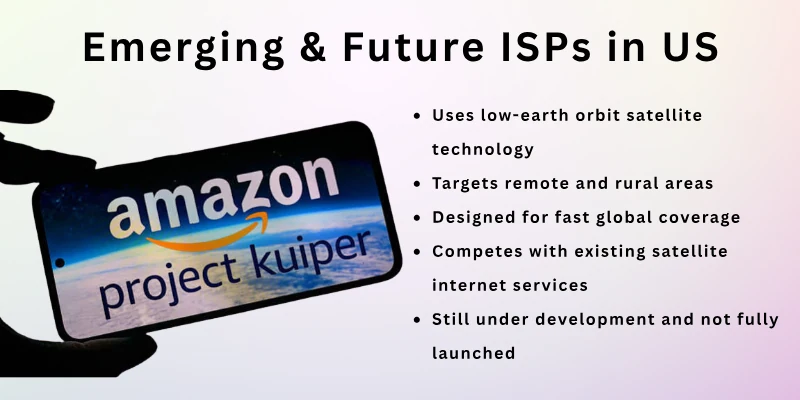
- Uses low-earth orbit satellite technology
- Targets remote and rural areas with weak internet access
- Designed for fast global coverage
- Competes with existing satellite internet services
- Still under development and not fully launched
Purpose of the Project
- Brings internet access to areas without traditional networks
- Reduces the digital gap between connected and unconnected regions
- Improves connectivity for remote users worldwide
Current Status of the Project
The project is still under development and has not been fully launched yet. Amazon is working on deploying satellites and testing the system before making it widely available.
Comparison of Major US Internet Providers
Different internet services in the United States offer different speeds, reliability, and service quality. They vary in technology, with some using fiber and others using cable or wireless networks.
This comparison shows how each one works.
| Provider | Connection Type | Speed Range | Monthly Price | Weak Point |
| AT&T Internet | Fiber, DSL | 100 Mbps to 5 Gbps | $55 to $150+ | Fiber not everywhere |
| Verizon Fios | Fiber | 300 Mbps to 1 Gbps | $50 to $90 | Limited locations |
| Comcast Xfinity | Cable | 75 Mbps to 1.2 Gbps | $40 to $100+ | Speed changes during peak hours |
| Charter Spectrum | Cable | 300 Mbps to 1 Gbps | $50 to $100 | Prices rise after the promo |
| Cox Communications | Cable | 100 Mbps to 1 Gbps | $50 to $150+ | Data limits in some plans |
| CenturyLink | DSL, Fiber | 20 Mbps to 940 Mbps | $50 to $80+ | Slow DSL in some areas |
| Optimum | Cable, Fiber | 300 Mbps to 1 Gbps | $40 to $100+ | Service varies by region |
| Frontier Communications | Fiber, DSL | 50 Mbps to 5 Gbps | $30 to $150+ | DSL performance low |
| Windstream | DSL, Fiber | 100 Mbps to 1 Gbps | $25 to $100 | Fiber not widely available |
| T-Mobile Home Internet | 5G Wireless | 72 Mbps to 245 Mbps | $30 to $70 | Speed depends on the signal |
| Starlink | Satellite | 50 Mbps to 250 Mbps | $90 to $165 | The weather can affect service |
| Mediacom | Cable | 100 Mbps to 1 Gbps | $20 to $100+ | Data limits in some plans |
Key Differences of Top ISPs in the US
Internet service providers in the United States work with different technologies and coverage areas. Each provider also targets different users, from city households to rural regions.
They are different in the areas below:
- AT&T Internet offers fiber and DSL services with mixed availability across cities and suburbs
- Verizon Fios focuses only on fiber internet with strong performance in limited regions
- Comcast Xfinity uses cable networks and covers a large number of urban and suburban areas
- Charter Spectrum provides cable internet with simple plans and a wide regional reach
- Cox Communications serves select states with cable internet and bundle options
- CenturyLink delivers DSL and fiber services, with fiber available in limited areas
- Optimum combines cable and fiber services mainly in the northeastern and southern regions
- Frontier Communications expands fiber internet in growing areas while still using DSL in rural zones
- Windstream focuses on rural and small-town connectivity using DSL and expanding fiber networks
- T-Mobile Home Internet uses 5G wireless networks for easy home internet setup
- Starlink provides satellite internet designed for remote and hard-to-reach locations
- Mediacom operates cable internet services mainly in small cities and rural communities
Best United States ISPs for Use
Internet companies in the US suit different needs. Some providers deliver strong performance for homes, while others cover rural or mobile users.
You will find here which ISP works best for different requirements.
- For high-speed fiber internet and strong home performance – Verizon Fios
- For wide availability and everyday home use – Comcast Xfinity
- For flexible cable internet plans in many regions – Charter Spectrum
- For mixed fiber and DSL internet across cities and suburbs – AT&T Internet
- For bundled services with internet and TV options – Cox Communications
- For stable internet in smaller towns and regional areas – Optimum
- For growing fiber access in expanding regions – Frontier Communications
- For rural and small-town internet access – Windstream
- For mobile-based home internet setup – T-Mobile Home Internet
- For satellite internet in remote locations – Starlink
- For budget-friendly cable internet in small communities – Mediacom
- For fiber internet in selected urban areas – CenturyLink
Factors for Choosing an ISP in the United States
Each household uses the internet in a different way, so one plan may not fit all needs. Some need strong internet speed, while others care more about price or coverage in their area.
Check these points carefully.
- Required Speed: Assess how much speed your home uses. Faster plans work better for streaming, video calls, and large downloads.
- Availability: Confirm if the provider works in your location. Some ISPs only serve certain cities or regions, while others cover wider areas.
- Pricing: Review the monthly bill, not just the starting price. Extra fees can change the final amount you pay.
- Internet Type: Compare fiber, cable, wireless, and satellite options. Each type gives a different level of performance and availability.
- Usage Limits: Some plans include unlimited data, while others set usage limits. This matters if you use the internet throughout the day.
- Installation: Monitor how easy it is to install the service. Some providers offer quick setup, while others may require professional installation.
- Plan Duration: Verify the contract length before signing up. Some ISPs require long agreements, while others allow flexible monthly plans.
Types of Internet Connections in the United States
The internet in the United States is powered through different network systems. Each system works in its own way and gives a different level of performance. The US internet market includes multiple connection types.
- Fiber Type: Uses light signals through fiber cables to send data. It delivers very high speed and strong performance for daily online use.
- Cable Type: Runs on the same lines as cable TV services. It provides wide availability and good speed for most households.
- DSL Type: Works through telephone lines. It offers basic to moderate speed and is common in older or rural areas.
- Satellite Type: Connects through satellites in space. It reaches remote locations where wired internet is not available.
- 5G Wireless Type: Relies on mobile network towers to deliver home internet. It allows quick setup without physical cables.
Internet Speed in the United States
Internet speed in the US depends on network traffic, plan type, and local infrastructure, and it varies. Each connection type delivers a different speed range.
You can see the speed details below.
- Fiber Internet: 300 Mbps to 5 Gbps for high-speed home use
- Cable Internet: 100 Mbps to 1 Gbps for most everyday activities
- DSL Internet: 10 Mbps to 100 Mbps for basic online tasks
- Satellite Internet: 25 Mbps to 250 Mbps with changing performance
- 5G wireless Internet: 50 Mbps to 300 Mbps, depending on signal strength
Challenges of the Internet in the United States
Internet quality in the United States comes with several challenges that affect users in different areas. Several network and coverage factors contribute to these problems.
Let’s move to the details.
- Network Congestion: Speed decreases during high-traffic hours. This issue is more noticeable in shared connections.
- Hidden Charges: Some plans include extra costs like equipment rental or service fees. These charges increase the final monthly bill.
- Limited Provider Options: Some areas have only one or two providers available. This reduces choice and makes it harder to switch services.
- Weather Impact: Certain internet types, especially satellite and wireless, can be affected by bad weather conditions. This can interrupt the connection.
- Customer Service Issues: Some users face delays in problem handling or service requests. This can cause frustration when issues are not fixed quickly.
- Upgrade Delays: In some regions, network upgrades take time. This slows down the arrival of better technology like fiber internet.
Conclusion
Guys! We learned about different types of ISPs in the United States, connection types, speed ranges, important factors to consider, and common challenges with internet quality. This blog gives a complete overview of the US internet market, from major providers to regional, rural, and emerging services.
Each provider has its own strengths and limits, so the right choice depends on your location, budget, and usage. No single ISP fits everyone, and your experience may change based on several factors.
Before you pick an ISP, review the FAQs section as well.
FAQs
This part covers common questions that help clear your remaining doubts about ISPs in the US.
Service quality from internet providers in the United States depends on network setup, local infrastructure, and user load. Some areas have advanced systems, while others still rely on older networks. Distance from main network points can also change network performance.
Internet service providers in the United States set prices based on technology costs and regional setup needs. Building networks in some areas costs more, which increases the monthly plans. Extra services and equipment can also add to the bill. This creates price differences across providers.
US ISPs use different methods depending on location. Urban areas often get fiber or cable connections with stronger performance. Rural areas depend more on wireless or satellite systems. This difference shapes internet experiences across regions.
Yes, the weather can impact internet services in the United States. Satellite and wireless connections may weaken during storms or heavy rain. Wired systems like fiber stay more stable in most cases. The effect depends on the connection type.
Some internet providers in the US do not cover every area due to high infrastructure costs. Expanding networks into low-population regions takes time and resources. As a result, only a few providers operate in certain locations. This limits user choice.
Wired ISPs in the US use cables, such as fiber or DSL, for connection. Wireless ISPs use mobile towers or satellite signals. Each type works differently based on location. Both serve different user needs.
High network traffic can slow down internet providers in the United States during busy hours. Shared networks feel this issue more when many users connect at once. Speed may drop temporarily in such cases.
Internet use in the United States is uneven. Urban areas usually have faster and more stable connections because of a stronger network. Many rural locations still rely on wireless or satellite internet services, as internet access varies between regions.
They expand by installing new cables, towers, and fiber lines. They also upgrade older systems to improve coverage. Expansion helps bring service to more locations. This process takes time and investment.
Users may experience differences even with similar plans from internet providers in the United States. Location, network load, and distance from infrastructure all matter. These factors change speed and stability. That is why experiences are not always the same.




- Be Respectful
- Stay Relevant
- Stay Positive
- True Feedback
- Encourage Discussion
- Avoid Spamming
- No Fake News
- Don't Copy-Paste
- No Personal Attacks
- Be Respectful
- Stay Relevant
- Stay Positive
- True Feedback
- Encourage Discussion
- Avoid Spamming
- No Fake News
- Don't Copy-Paste
- No Personal Attacks
