Advantages and Disadvantages of the Internet
Published: 3 May 2026
When I first studied global internet usage for this article, I was surprised by the numbers. Today, about 6 billion people around the world use the internet, which is roughly 74 percent of the global population, and this figure keeps rising every year.
The internet shapes how we learn, work, shop, and connect, but it also brings real challenges that affect our privacy, time, health, and relationships. In this article, I will show both sides with up‑to‑date facts so you clearly grasp the unexpected advantages and disadvantages of internet usage.
Let’s go into detail and see how the internet affects us positively and negatively.
Advantages of the Internet
The internet has changed how we live, learn, work, and connect with others. I see its power every day, from finding fast information to doing tasks that once took hours. While some benefits are well known, others truly shape our future.
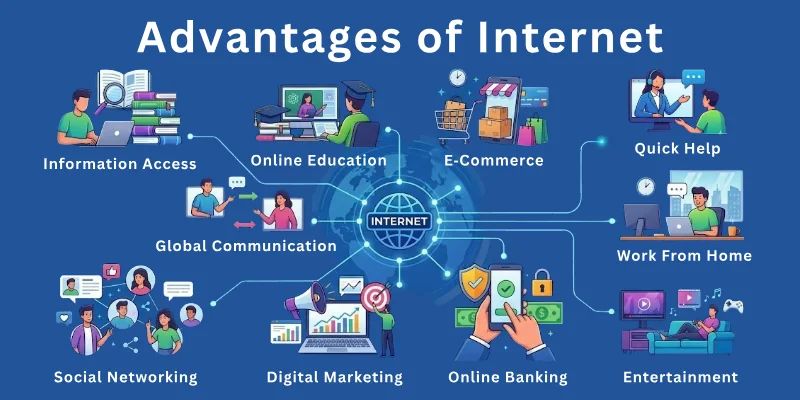
Here is a comprehensive list of all the major benefits of the internet:
- Easy Access to Information
- Global Communication
- Online Education and Learning
- E‑Commerce and Online Shopping
- Work From Home
- Social Networking
- Digital Marketing
- Online Banking and Digital Payments
- Teamwork from Anywhere
- Entertainment and Streaming Services
- Online Doctor Consultations
- New Ideas and Technology
- Search Engines and Research Tools
- Quick Help and Assistance Online
- Personalized Tips and Ideas Online
Let’s break down these internet advantages one after another.
1. Easy Access to Information
The internet makes finding information faster than ever. You can learn about any topic in minutes. It saves time and effort compared to books or offline sources.
Students, professionals, and hobbyists all use it to stay informed. Even complex subjects become easy to understand online. The internet keeps knowledge at your fingertips.
- Learn about any topic quickly online
- Access books, articles, and online resources
- Check the latest news anytime
- Research projects from anywhere
Quick Tip: Bookmark your favorite websites for easy access anytime.
2. Global Communication
The internet allows people to connect across the world. You can send messages, make calls, or video chat instantly. It brings families, friends, and colleagues closer.
Language translation tools make communication easier than ever. Businesses also use it to reach international clients. Global communication keeps people connected and informed every day.
- Send messages to anyone, anywhere, instantly
- Make video calls with friends or colleagues
- Connect with people across the world
- Share ideas and updates in real time
Real-Life Example: You can video call your friend who lives in another country.
3. Online Education and Learning
The internet provides many ways to learn online. You can join courses, watch tutorials, or read educational materials. Learning is no longer limited to classrooms.
Students can study at their own pace. Teachers can share lessons with anyone, anywhere. Online education opens new opportunities for skill growth.
- Take courses online from home
- Watch tutorials and lessons anytime
- Access lectures and educational resources online
- Learn new skills quickly through the internet
Try This: Sign up for a free online course and start learning today.
4. E‑Commerce and Online Shopping
The internet allows shopping without leaving home. You can compare products and prices quickly. Online stores offer items that may not be available locally.
Delivery services bring purchases to your doorstep. Businesses reach customers from different regions easily. Shopping online saves time and effort.
- Buy products from home conveniently
- Compare prices across multiple online stores
- Easily access items not available locally
- Get fast delivery service to your home
Fun Fact: Global online shopping sales reached over $6.5 trillion in 2025.
5. Work From Home
The internet makes it possible to work from home easily. You do not need to travel to an office every day. Many jobs now allow people to work from their own space.
It helps save time and reduces daily stress. People can manage their work and personal life better. The internet gives more freedom in how and where you work.
- Work comfortably from your own home
- Save time on commuting every day
- Manage both work and personal responsibilities
- Find remote jobs and opportunities online
Quick Tip: Create a quiet space at home for better focus.
6. Social Networking
The internet helps people connect through social networking platforms. You can share your thoughts, photos, and experiences. It allows you to stay in touch with friends and family. You can also meet new people with similar interests.
Social networking builds online communities. It makes communication more fun and interactive.
- Share photos and updates with friends online
- Connect with family no matter the distance
- Meet new people with shared hobbies
- Join groups and communities of interest
Real-Life Example: You can share your daily life with friends through posts and stories.
7. Digital Marketing
The internet helps businesses grow through digital marketing. Companies can promote their products online. It is easier to reach a large audience in less time.
Small businesses can also compete with bigger brands. Ads and social media help attract more customers. Digital marketing makes business growth faster and smarter.
- Promote products easily on social media platforms
- Reach more customers through online advertising
- Run ads on websites and apps efficiently
- Grow your business using digital marketing tools
Did You Know? Many small businesses get most customers through online marketing.
8. Online Banking and Digital Payments
The internet makes banking simple and fast. You can transfer money without visiting a bank. Paying bills online saves time and effort. People can manage their accounts from anywhere. It also helps track spending easily. Digital payments make daily life more convenient.
- Send money to anyone quickly online
- Pay bills from home without waiting
- Check your bank account anytime online
- Track your daily spending easily online
Try This: Use online banking to pay your next bill in minutes.
9. Teamwork from Anywhere
The internet allows people to work together from different places. Teams can share ideas and complete tasks online. It removes the need to be in the same location.
People can join meetings from anywhere. Work becomes faster and more flexible. The internet makes teamwork easy and efficient.
- Work with your team from anywhere easily
- Share files and ideas securely online
- Join virtual meetings from any location
- Complete projects together using online tools
Insight: Teams can complete projects faster, even from different cities.
10. Entertainment and Streaming Services
The internet provides endless entertainment options for everyone. You can watch movies, shows, and videos anytime you want. Music and games are also available online.
It helps people relax and enjoy their free time. You do not need to go anywhere for entertainment. The internet makes fun and entertainment easily accessible.
- Watch movies and TV shows online easily
- Listen to music anytime from any device
- Play games online with friends or alone
- Enjoy entertainment at home without leaving
Fun Fact: Millions of people stream movies and shows online every day.
11. Online Doctor Consultations
The internet allows people to talk to doctors from home. You can get medical advice without visiting a clinic. It saves time and effort, especially in emergencies.
People living in remote areas benefit the most. You can also book appointments online. The internet makes healthcare more accessible and convenient.
- Talk to doctors from home easily
- Book doctor appointments online anytime
- Get medical advice from professionals quickly
- Save time visiting hospitals and clinics
Keep in Mind: Always choose trusted platforms for online medical advice.
12. New Ideas and Technology
The internet helps people discover new ideas and technologies. It spreads knowledge about modern tools and innovations. People can learn about new trends quickly.
It also supports creativity and problem-solving. Many inventions grow with the help of the internet. This makes the world more advanced every day.
- Learn about new technologies online easily
- Discover creative ideas through internet platforms
- Follow the latest trends and innovations
- Improve your problem-solving skills online
Insight: Many new apps and tools start as simple online ideas.
13. Search Engines and Research Tools
The internet makes searching for information very easy. Search engines help you find answers in seconds. You can explore different topics with simple keywords.
Research becomes faster and more effective. Students and professionals rely on these tools daily. The internet simplifies learning and discovery.
- Find answers to questions online within seconds
- Search any topic quickly using keywords
- Use online tools to complete research efficiently
- Explore different types of information easily online
Quick Tip: Use clear keywords to get better search results.
14. Quick Help and Assistance Online
The internet makes it easy to get help whenever you need it. You can find answers to problems in seconds. Many websites and forums offer quick solutions.
Customer support is also available online for different services. This saves time and reduces stress. The internet helps you solve issues without delay.
- Get answers to problems very quickly online
- Find help on websites anytime you need it
- Contact support services easily through the internet
- Solve everyday issues without waiting in person
Real-Life Example: You can fix a small tech issue by watching a quick tutorial online.
15. Personalized Tips and Ideas Online
The internet shows content based on your interests and needs. You see suggestions that match what you like. This helps you discover useful ideas and content easily. It saves time because you do not have to search everything manually.
Many platforms use your activity to improve suggestions. The internet makes your experience more personal and relevant.
- Get ideas tailored to your personal interests
- See content that matches your preferences online
- Discover useful tips and suggestions easily online
- Save time by receiving relevant recommendations
Did You Know? Many apps suggest content based on your previous activity.
Disadvantages of the Internet
While the internet offers many benefits, it also comes with serious drawbacks. I have seen how it can waste time, affect focus, and even create stress in daily life. Many people depend on it too much without realizing its negative effects.
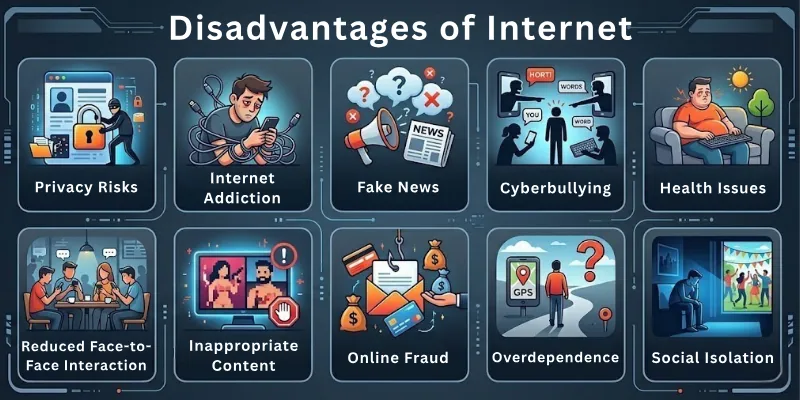
From privacy risks to health problems, the downsides are real and growing. It is important to understand these issues so we can use the internet wisely.
I have given a list of notable drawbacks of the internet.
- Privacy and Data Security Risks
- Internet Addiction and Time Wastage
- Spread of Misinformation and Fake News
- Cyberbullying and Online Harassment
- Health Issues and Screen Addiction
- Reduced Face-to-Face Interaction
- Exposure to Inappropriate Content
- Online Fraud and Scams
- Overdependence on Technology
- Social Isolation and Loneliness
- Limited Internet Access
- Loss of Productivity and Focus
Learn more about these limitations of the internet in detail.
1. Privacy and Data Security Risks
The internet stores a lot of personal information every day. Many people share their data without thinking about safety. Hackers look for ways to steal this information.
Companies also collect user data for different purposes. Data leaks can expose private details and cause serious problems. This can also lead to financial loss.
- Personal data can be stolen by hackers
- Weak passwords increase the risk of online attacks
- Apps may track your activity without permission
- Data leaks can expose sensitive private information
Keep in Mind: Always use strong passwords and avoid sharing personal details on unknown websites.
2. Internet Addiction and Time Wastage
The internet can take up too much of your time. People often lose track while scrolling or watching videos. This habit slowly becomes part of daily life.
It reduces focus and affects productivity over time. Many people struggle to control how long they stay online. It also affects sleep and daily routines.
- Spending too much time scrolling social media daily
- Ignoring important tasks due to internet overuse
- Losing track of time while watching videos
- Reduced focus and productivity in daily work
Quick Tip: Set a daily screen time limit to stay focused.
3. Spread of Misinformation and Fake News
The internet spreads information very fast across the world. Not everything you see online is true or reliable. Many people share news without checking facts.
This creates confusion and wrong beliefs among users. It becomes hard to know what information is real. False information can influence important decisions.
- False news spreads quickly through social media platforms
- People share information without checking the real source
- Misleading content can create confusion and panic
- It’s hard to tell what information is true online
Did You Know? Many viral posts online are shared without fact-checking first.
4. Cyberbullying and Online Harassment
The internet allows people to connect and interact freely. Sometimes people misuse this freedom to harm others online. Cyberbullying includes hurtful messages and public insults.
This behavior can affect mental health and confidence. Many victims feel stressed and unsafe in online spaces. It can also lower self-esteem.
- Sending hurtful messages to someone through the internet
- Targeting people with insults on social media
- Online threats can harm mental health badly
- Victims may feel stressed and emotionally affected
Real-Life Example: A student may feel upset after receiving negative comments online.
5. Health Issues and Screen Addiction
Using the internet for long hours can affect your health. Many people spend too much time in front of screens daily. This habit can cause eye strain and headaches.
It can also disturb sleep and reduce physical activity. Over time, it may lead to serious health problems. It also affects mental well-being and mood.
- Long screen time can harm your eyesight
- Sitting for hours reduces physical body movement
- Poor sleep habits due to late-night usage
- Mental health can decline with excessive use
Quick Tip: Take short breaks from screens to protect your health.
6. Reduced Face-to-Face Interaction
The internet has changed how people communicate today. Many people prefer online chats over real conversations. They spend more time on screens instead of meeting in person.
This reduces direct interaction with family and friends. It can weaken relationships over time. People may feel less connected in real life.
- Less time spent talking with family members
- People avoid real conversations in daily life
- Weak bonding due to a lack of personal interaction
- Increased reliance on online communication tools
Keep in Mind: Spend more time with people in real life.
7. Exposure to Inappropriate Content
The internet contains all kinds of content for users. Not all of this content is safe or suitable. Some websites show harmful or inappropriate material. This content can sometimes appear without warning or filters.
Children and young users are more at risk. This content can affect their thinking and behavior. It may create negative habits over time.
- Children may see harmful content online easily
- Some websites show violent or inappropriate material
- Lack of control over what users can access
- Negative impact on young minds and behavior
Did You Know? Many platforms use filters to block harmful content.
8. Online Fraud and Scams
The internet has made online scams more common today. Many people face fraud while shopping or sharing information. Hackers use fake websites and emails to trick users.
People may lose money or personal data easily. It becomes difficult to recover from such losses. Awareness is very important to stay safe online.
- Fake websites can steal your personal information
- Online scams can lead to financial loss
- Fraud emails trick users into sharing details
- Lack of awareness increases the risk of being scammed
Stay Alert: Always verify websites and avoid clicking unknown links.
9. Overdependence on Technology
Many people rely on technology for almost everything today. Smartphones, apps, and computers handle daily tasks. This dependence can make people less self-reliant. They may struggle to solve problems without online tools.
Overuse of technology can create frustration when devices fail. People may lose practical skills they once had.
- Dependence on devices reduces problem-solving abilities
- People struggle when technology suddenly stops working
- Overuse may weaken memory and thinking skills
- Relying too much on apps can limit personal growth
Quick Tip: Practice doing tasks manually to reduce dependence on technology.
10. Social Isolation and Loneliness
Many people spend hours online instead of meeting others. Social media and online entertainment can replace in-person activities. This can leave some people feeling disconnected from friends.
Isolation can affect mental health and emotional well-being. People may avoid real-world interactions because online options feel easier.
- People may feel anxious when offline
- Reduced participation in community activities
- Less confidence in speaking during face-to-face interactions
- Feeling disconnected even when using social networks
Keep in Mind: Make time to meet friends and family offline regularly.
11. Limited Internet Access
Not everyone has the same access to the internet. People in remote areas often face connectivity problems. Slow internet and a lack of resources limit online opportunities.
Limited access can affect learning and job growth. Students and workers may miss out on important online tools. This makes it harder for them to compete equally.
- Many people cannot join online classes or webinars
- Limited access restricts participation in digital training programs
- People may miss government or health services online
- Small businesses struggle to reach customers digitally
Did You Know? Almost one-third of the world still lacks reliable internet access.
12. Loss of Productivity and Focus
The internet can be distracting while working or studying. Notifications, videos, and social media draw attention constantly. People may spend more time online than planned. This reduces efficiency and slows task completion.
Loss of focus affects both professional and personal responsibilities. It can lead to stress and missed deadlines.
- Frequent notifications disrupt concentration during work hours
- Browsing websites reduces the time spent on important tasks
- Multitasking online lowers efficiency in daily activities
- Social media can easily distract from real priorities
Quick Tip: Turn off unnecessary notifications to maintain focus and productivity.
Tips & Tools for Maximizing Internet Benefits
The internet offers endless opportunities, but using it without direction can feel overwhelming. Small habits and smart strategies can make your online experience more productive and safe.
From learning efficiently to protecting your family, there are ways to make the internet truly work for you. A few simple adjustments can turn your online time into a positive and balanced experience.
- Productivity Apps: Use apps to organize work and tasks. Apps like calendars, to-do lists, and reminders help you plan your day and manage multiple projects efficiently.
- Online Learning Platforms: Explore platforms to learn new skills. Websites and apps offer courses, tutorials, and educational videos for students, professionals, and hobbyists to gain knowledge anytime.
- Parental Controls: Protect children with safe browsing tools. Filters, safe search, and activity monitoring help kids access only age-appropriate content online.
- Screen Time Management: Set limits to prevent internet addiction. Regular breaks and daily usage limits prevent fatigue and help balance online and offline activities.
- Password Managers: Keep accounts secure with password tools. They generate and store strong passwords, making it easier to protect your online accounts from hacking.
- Cloud Storage: Save and access files safely online. Cloud services like Google Drive or Dropbox allow you to back up important documents and access them from anywhere.
- Online Collaboration Tools: Work efficiently with teams remotely. Tools like shared documents, project boards, and video conferencing help coordinate tasks and communicate clearly.
- News & Fact-Checking Tools: Stay informed with reliable sources. Use verified websites and fact-checking apps to avoid fake news and get accurate information online.
Conclusion
Through this guide, we have discussed the main advantages and disadvantages of the internet. From online learning, social networking, digital marketing, entertainment, technology updates, research tools, and quick help to personalized suggestions, the internet touches almost every part of life.
Even though it brings convenience and opportunities, we must handle its challenges carefully. Protect your data, limit screen time, engage in real-life interactions, and double-check facts to stay safe. This way, the internet can remain a helpful tool instead of a source of stress.
Keep using the internet responsibly and mindfully. Don’t skip the next FAQ section; it has more insights and tips that can make your online experience even better.
FAQs: Advantages and Disadvantages of the Internet
Find quick answers to common questions about the pros and cons of the internet.
The internet helps students learn faster and access many resources online. They can take online courses, watch tutorials, and do research. However, too much internet use can lead to distraction and reduce focus. Students need to balance study time online and offline to avoid stress.
Internet advertising helps brands grow faster, but it requires caution to avoid scams.
Advantages:
- Businesses can reach more people online
- Ads can target specific audiences needed
Disadvantages:
- People may ignore ads due to overload
- Fake or misleading ads can mislead customers
Online pictures help students, designers, and businesses find visual content rapidly. They make learning and presentations more attractive and clear. On the downside, some images are copyrighted or misleading. Using verified and licensed images is important to avoid ethical issues.
The Internet allows people to communicate, work, and shop from anywhere. It supports innovations like online learning, e-commerce, and digital banking. But over-reliance on technology can reduce face-to-face interactions. People may also experience security risks if they don’t protect their data.
The internet connects people globally, but misuse can harm social interactions and safety.
- Cyberbullying and online harassment can affect mental health
- The spread of fake news creates confusion
- Social isolation increases when people prefer online communication
- Addiction to online activities reduces productivity
The Internet makes managing money fast and convenient. You can transfer funds, pay bills, and check your balance anytime. However, weak passwords and phishing attacks can put your money at risk. Using secure networks and strong passwords reduces these dangers.
The Internet helps students and professionals find facts quickly from many sources. It provides access to books, articles, and videos without visiting a library. Some information may be inaccurate, so users must check sources carefully. Ads and pop-ups can also cause distractions.
The internet helps people find health information quickly and lets doctors and patients communicate online. Some websites have wrong or outdated information that can confuse users. Too much online health advice may also cause worry without consulting a real doctor.
Internet-based therapy lets people talk to mental health professionals from home using video or chat. It is helpful for those who live far from clinics or cannot travel easily. Some may feel less comfortable sharing online than in person. Poor internet or privacy issues can also disrupt sessions.
The internet gives students access to unlimited study materials and online courses. Teachers can share lessons with anyone, anywhere. Yet, students may waste time on social media or unreliable sources. Fact-checking and time management help make education more effective.
It lets people talk instantly by text, video, or voice from anywhere. It helps families, friends, and teams stay connected. Written messages can cause misunderstandings since tone and expressions are missing. Spending too much time online may reduce real-world interactions.
The internet helps businesses reach global customers and reduce costs for marketing and operations. Companies can sell online, communicate with teams, and improve efficiency. On the downside, competition is high, and businesses may face cyber threats or online fraud.
It lets people access websites, videos, and articles on any topic quickly. It helps with learning, entertainment, and finding useful information. Sometimes, users can land on unreliable or fake websites. Spending too much time browsing can also reduce productivity.
Internet e-commerce allows people to buy and sell products online from anywhere. It saves time and provides access to a wide variety of goods. However, online shopping can lead to scams or delayed deliveries.
The internet on computers allows fast communication, data sharing, and access to cloud services. It makes work and study easier and more efficient. On the downside, computers connected to the internet can be vulnerable to viruses and hacking.
Internet marketing helps businesses reach a wide audience and grow their brand quickly. It allows companies to target specific customers and track results easily. On the downside, competition is high, and creating effective campaigns can require time and money.
The internet helps children learn new skills and explore creative activities. It lets them join online workshops and virtual classes to gain knowledge. However, they may see inappropriate content or spend too much time online. Parents should guide usage and set limits to keep them safe.
Internet news delivers information instantly from around the world. People can read, watch, or listen to the news anytime on their devices. However, some news websites share fake or biased information that can mislead readers. Spending too much time on news sites can also increase stress or anxiety.


- Be Respectful
- Stay Relevant
- Stay Positive
- True Feedback
- Encourage Discussion
- Avoid Spamming
- No Fake News
- Don't Copy-Paste
- No Personal Attacks
- Be Respectful
- Stay Relevant
- Stay Positive
- True Feedback
- Encourage Discussion
- Avoid Spamming
- No Fake News
- Don't Copy-Paste
- No Personal Attacks
