ISPs in Malaysia: Latest Pricing, Plans and Features
Published: 29 May 2026
Malaysia now has average speeds of around 150 Mbps, but the experience still depends on the internet provider and your location. Around 28 million users stay connected, and internet penetration has crossed nearly 85 to 87 percent in 2026.
The internet providers in Malaysia look good, but they confuse many people. One plan shows 300 Mbps, and another shows 500 Mbps, but the real speed feels different. Here, I will walk you through ISPs in Malaysia and show what affects your internet experience at home. You will see what most people miss before they choose a plan.
Before you spend your money, look at what you are really paying for.
List of ISPs in Malaysia
There are several internet service providers in Malaysia, including fibre, mobile, and business networks. This list shows the main ISPs in the country so you can quickly understand who operates in the market.
1. Home Fibre Internet ISPs
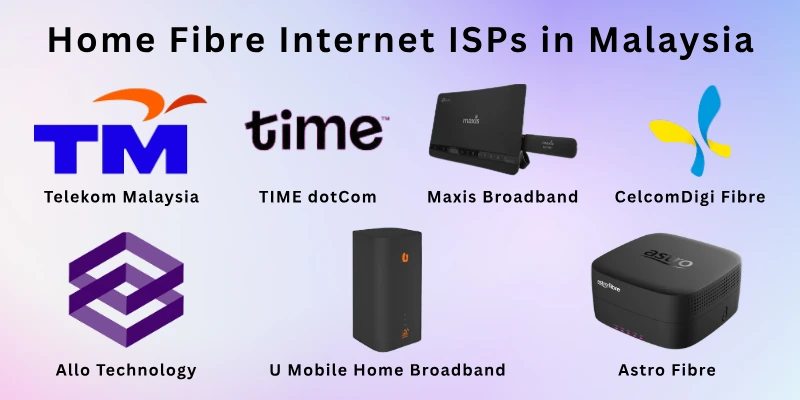
- Telekom Malaysia (Unifi)
- TIME dotCom (TIME Fibre)
- Maxis Broadband
- CelcomDigi Fibre
- U Mobile Home Broadband
- Allo Technology
- Astro Fibre
2. Mobile & Wireless Internet Providers
- CelcomDigi
- Maxis
- U Mobile
- YES (YTL Communications)
- Unifi Air (Telekom Malaysia)
3. Business & Enterprise ISPs
- REDtone
- Telekom Malaysia (TM One)
- TIME dotCom (Enterprise Solutions)
- CelcomDigi Business
Each Malaysian ISP is described separately.
Home Fibre Internet ISPs
Home fibre internet ISPs provide fixed broadband connections for houses and apartments. In Malaysia, fibre networks are operated by providers with either wide or limited coverage across different areas.
This list shows the main home fibre ISPs available in the country.
1. Telekom Malaysia (Unifi)
Telekom Malaysia (Unifi) is the largest internet provider in Malaysia. It operates a major part of the fibre network in the country. It delivers internet services to homes and businesses.
- Wide fibre network in urban and rural areas
- Multiple speed options for different needs
- Bundle services with TV and mobile plans
- A router is included with the connection setup
2. TIME dotCom (TIME Fibre)
TIME dotCom provides high-speed fibre internet in selected areas. It focuses on fast and stable connections. It is known for strong performance in high-demand usage.
- High-speed fibre connection
- Stable performance under load
- Unlimited data usage
- Focus on high-rise buildings
- Balanced upload and download speeds
3. Maxis Broadband
Maxis Broadband provides fibre and wireless internet services. It offers home internet along with mobile network integration. It delivers stable connections for regular use.
- Fibre and wireless internet options
- Bundle plans with mobile services
- Simple installation process
- Compatible with modern routers
- Regular network upgrades
4. CelcomDigi Fibre
CelcomDigi Fibre provides home internet through fixed fibre connections. It is part of the CelcomDigi network services. It combines fibre internet with its mobile ecosystem.
- Fibre connection for home use
- Bundle options with mobile plans
- Stable connection for daily usage
- Router included during setup
- Uses existing fibre infrastructure
5. U Mobile Home Broadband
U Mobile Home Broadband provides internet using 4G and 5G networks. It does not require fibre installation. It is designed for homes without fibre access.
- Uses 4G and 5G networks
- No wired installation needed
- Portable router setup
- Quick activation process
6. Allo Technology
Allo Technology provides fibre internet using its own network infrastructure. It focuses on selected towns and growing areas. It works as an alternative fibre provider in those locations.
- Own fibre network infrastructure
- Focus on selected regions
- Stable connection for home use
- Works with local service partners
- Expanding network gradually
7. Astro Fibre
Astro Fibre provides home internet bundled with entertainment services. It uses fibre infrastructure from other networks. It is designed for users who want internet and TV services together.
- Fibre internet with TV bundles
- Uses partner fibre networks
- Single bill for internet and content
- Router provided with installation
- Focus on home entertainment usage
Mobile & Wireless Internet Providers
Mobile and wireless internet providers in Malaysia deliver internet via mobile networks rather than fixed lines. These services use 4G and 5G coverage, making them widely accessible without installation. This section covers the main mobile and wireless ISPs.
1. CelcomDigi
CelcomDigi runs a mobile network formed from the merger of Celcom and Digi. It connects users through a shared telecom system that covers most parts of the country. It focuses on large-scale mobile connectivity.
- Built from the Celcom and Digi network merger
- Uses shared towers and spectrum
- Runs national 5G access
- Offers prepaid and postpaid structures
- Manages large user traffic
2. Maxis
Maxis operates its own mobile network in Malaysia. It focuses on maintaining stable connections in key locations. It has a long history in the telecom sector.
- Own network infrastructure control system
- Strong urban presence in key cities
- Business and consumer services offering
- Device bundle options with contracts included
- Long-running telecom brand in the Malaysian market
3. U Mobile
U Mobile operates a mobile network that focuses on competitive pricing and frequent promotions. It expands its 5G services step by step.
- Promotion-based data is available regularly
- Fast rollout of new plan updates
- Focus on mobile data usage
- Different plan options for users
- Expanding 5G connection launch
4. YES (YTL Communications)
YES runs a digital mobile network managed mostly through online systems. It uses a data-first model and focuses on 5G expansion.
- App-based service control
- Digital signup process
- Costs depend on the data included in the plan
- Focuses on the 5G network launch
- Limited physical outlets
5. Unifi Air (Telekom Malaysia)
Unifi Air delivers wireless internet using mobile signals instead of fibre cables. It works as a home internet option where fibre is not available.
- Wireless home internet service for households
- Uses the TM mobile network infrastructure
- Plug-and-play setup without extra steps
- Fixed location usage at one place
- No wiring required during the installation process
Business & Enterprise ISPs
Business and enterprise internet providers in Malaysia provide internet services designed for companies and organizations. They are used in offices, institutions, and corporate operations. This section outlines the main enterprise internet providers in Malaysia.
1. REDtone
REDtone provides internet and communication services for companies in Malaysia. It focuses on business connectivity and digital network services for organizations that need stable data systems.
- Builds network solutions for corporate use
- Provides communication tools for organizations
- Offers cloud and managed services
- Works with enterprise-level connectivity systems
- Supports large office network setups
2. Telekom Malaysia (TM One)
TM One is the business division of Telekom Malaysia. It delivers digital infrastructure and ICT services for the government and corporate sectors across the country.
- Develops digital infrastructure projects
- Provides ICT systems for large organizations
- Manages government communication networks
- Offers data center facilities
- Builds enterprise security systems
3. TIME dotCom (Enterprise Solutions)
TIME dotCom Enterprise Solutions provides internet and network services for companies that need high-capacity connections. It focuses on data-heavy environments and corporate operations.
- Supplies high-capacity internet links
- Connects corporate office networks securely
- Runs data center connectivity services
- Provides cloud network integration solutions
- Builds enterprise circuit connections
4. CelcomDigi Business
CelcomDigi Business provides communication and internet services for companies using mobile and fixed networks. It supports business communication through integrated digital services.
- Offers corporate mobile connectivity
- Provides business internet connections
- Builds communication platforms for companies
- Supplies managed network services
- Supports enterprise digital tools
How Internet Service Providers Work in Malaysia
Internet services in Malaysia connect people to the internet using fibre cables, mobile towers, and wireless systems. Each provider runs its own network or shares parts of its infrastructure with larger operators. Data moves through these networks before reaching devices.
- Network Setup: ISPs use fibre lines and mobile towers to build internet connections. They link different areas through a shared backbone system.
- Data Transfer: Internet data travels in small packets through ISP networks to devices. The system routes information between servers and users.
- Service Areas: Each ISP operates in specific locations based on its network reach. Some cover wide regions, while others cover selected areas.
- Connection Access: Users connect through routers, fibre modems, or mobile SIM cards. The ISP activates the service and links the device to its network.
- Traffic Control: ISPs manage data flow to keep the network stable. They balance usage across users to maintain continuous access.
ISP Coverage Map in Malaysia
ISP coverage in Malaysia shows where each internet provider can offer service. Some providers reach many locations, while others stay limited to certain zones. Checking coverage helps you know which internet options are available at your address.
- Fibre Coverage Areas: Fibre internet works through fixed cables installed. Availability depends on whether the area has an installed fibre system.
- Mobile Coverage Areas: Mobile internet depends on signal strength from nearby towers. Performance changes based on location and network load.
- Enterprise Coverage Zones: Business internet uses network setups for offices and organizations. Coverage depends on contract location and service setup.
- Coverage Checking Tools: You can check availability through official ISP websites. These tools show whether fibre or mobile service works at a specific address.
Pricing Comparison of ISPs in Malaysia
Broadband providers in Malaysia charge different prices based on speed and network type. Fibre plans usually cost more than mobile internet due to infrastructure needs.
This section compares the main ISP pricing in Malaysia:
| ISP | Type | Monthly Price (Approx) | Plan Details |
| Telekom Malaysia (Unifi) | Fibre | RM89 – RM399 | Home internet with multiple speed options |
| TIME dotCom (TIME Fibre) | Fibre | RM99 – RM379 | High-speed plans for urban homes |
| Maxis Broadband | Fiber/Wireless | RM89 – RM249 | Home internet with mobile bundles |
| CelcomDigi Fibre | Fibre | RM90 – RM260 | Fibre plans with mobile integration |
| U Mobile Home Broadband | Wireless | RM68 – RM139 | No-fibre home internet |
| Allo Technology | Fibre | RM85 – RM200 | Selected area fibre coverage |
| Astro Fibre | Fibre (Bundle) | RM129 – RM299 | Internet + TV packages |
| CelcomDigi | Mobile | RM35 – RM150 | Mobile data plans |
| Maxis | Mobile | RM38 – RM188 | Mobile internet with premium options |
| U Mobile | Mobile | RM25 – RM128 | Budget mobile data plans |
| YES (YTL Communications) | Mobile | RM30 – RM120 | Digital 5G data plans |
| Unifi Air | Wireless | RM79 – RM129 | Fixed wireless home internet |
| REDtone | Business | Custom pricing | Enterprise network solutions |
| TM One | Business | Custom pricing | Corporate ICT services |
| TIME Enterprise | Business | Custom pricing | High-capacity business internet |
| CelcomDigi Business | Business | Custom pricing | Corporate mobile and data services |
Best Malaysia ISP for Different Uses
Internet companies in Malaysia offer services in different ways. Each company follows its own network system and service approach. Users get different results based on the provider they choose.
Here are the internet providers that match different needs:
- Best for high-speed fibre use: TIME dotCom (TIME Fibre)
- Best for wide coverage areas: Telekom Malaysia (Unifi)
- Best for mobile data value: U Mobile
- Best for stable urban performance: Maxis Broadband
- Best for budget mobile internet: YES (YTL Communications)
- Best for bundled home + TV services: Astro Fibre
- Best for wireless home setup: Unifi Air
- Best for business network systems: TM One
- Best for enterprise connectivity projects: REDtone
- Best for corporate fibre performance: TIME Enterprise
- Best for mobile + home integration: CelcomDigi
How to Choose the Best ISP in Malaysia
Internet speed in Malaysia depends on different types of connections, and each one works in a unique manner. Every provider has its own plan structure and network reach.
You will get here what matters when deciding on an ISP:
- Network Type: Internet providers use different systems, such as wireless routers, fibre, and mobile data. Each type gives a different way of connecting to the internet.
- Area Availability: Service depends on where the provider has built its network.
- Speed Range: Plans come with different speed levels. Higher speeds come when more devices share the same connection.
- Monthly Cost: Prices change based on speed and plan features. Some providers charge more for higher plans.
- Connection Stability: Internet quality changes at different times of the day. A steady connection does not break during use.
Future of the Internet in Malaysia
Internet use in Malaysia keeps increasing as new technology comes in. Providers are moving toward faster networks and wider coverage. More areas now get access to fibre and improved mobile signals.
This part describes future changes in internet services:
- 5G Expansion: 5G networks will cover more cities and towns in the coming years. It will increase mobile internet speed and reduce delays in connections.
- Fibre Network Growth: Fibre internet will reach more residential areas. Providers will expand cable networks to support higher data demand.
- Better Rural Access: More internet projects will shift towards smaller towns and rural regions. This will improve connection options outside major cities.
- Digital Service Growth: Internet companies will offer more online-based services. Users will access plans and support through mobile apps and websites.
Conclusion
This content describes ISPs in Malaysia and how they operate across different parts of the country. We also discussed coverage, pricing, service types, and the best ISP options for different use cases. This helps you understand both the strengths and limits of each provider.
As a personal note, every ISP in Malaysia comes with some limits, so it helps to balance speed, coverage, and cost based on your situation. You can reduce issues by selecting a plan that matches your area and expected usage.
Don’t leave out the next FAQs section. You may spot something more interesting there.
FAQs
These frequently asked questions include usual answers about ISPs in Malaysia.
Internet quality depends on network type, location, and signal strength. Weather, congestion, and infrastructure can also affect performance. Fibre connections usually give more stable results than wireless.
Yes, you can switch ISPs if your contract allows it. Some providers may require notice or early termination fees. A new installation may also be needed for fibre services. Always check the terms before changing ISPs in Malaysia.
Some ISPs offer unlimited data plans, but speed limits may apply after usage limits. Fibre plans provide higher or uncapped data. Mobile plans may include fair usage policies. You should verify contract terms, installation fees, and network coverage before subscribing to a package.
Yes, most fibre ISPs offer installation at the customer’s home. A technician sets up the modem and connects the line. Wireless services usually need less setup. Installation depends on the type of internet plan.
Many ISPs offer contract-based plans with fixed durations. Some also provide no-contract or prepaid options. Contracts often include installation or device benefits. It depends on the ISP and plan type.
Yes, most ISPs provide customer service through phone, apps, or online chat. They help with installation, billing, and technical issues. Response time can vary by provider. Support quality is part of the internet quality in Malaysia.
Installation time depends on the type of internet service. Fibre setup may take a few days due to wiring work. Wireless services can be activated faster. The process depends on the provider’s schedule.
- Prepaid plans require an advance payment before usage.
- Postpaid plans bill you at the end of the month.
Both are available in mobile internet plans in Malaysia. You can choose how you prefer to manage payments.
You can restart your router or check cables first. If the issue continues, then contact customer support. ISPs usually fix network issues from their side. Downtime depends on the cause of the problem.
An ISP is the company that provides internet service. An internet plan is the package you buy from that company. The plan decides your speed, data, and price. Each ISP designs plans to suit various types of users.






- Be Respectful
- Stay Relevant
- Stay Positive
- True Feedback
- Encourage Discussion
- Avoid Spamming
- No Fake News
- Don't Copy-Paste
- No Personal Attacks
- Be Respectful
- Stay Relevant
- Stay Positive
- True Feedback
- Encourage Discussion
- Avoid Spamming
- No Fake News
- Don't Copy-Paste
- No Personal Attacks
