ISPs in Pakistan: Compare and Choose From 34 Internet Providers
Published: 23 May 2026
In Pakistan, internet usage is rapidly growing as more people now rely on online services every day. But when we search for ISPs in Pakistan, we’re flooded with too many names and conflicting opinions. One person says PTCL works best, another claims Nayatel never drops, while others prefer mobile data over fiber.
I’ve gone through this confusion myself while testing different internet connections across Pakistan. In this blog, I’ll break down what each ISP offers, where they perform well, and where they fall short, so you can stop guessing and understand what fits your area.
Let’s get straight to what works and what doesn’t.
What is an Internet Service Provider (ISP)?
An Internet Service Provider is a company that provides internet access. It connects your home, office, or phone to the online world so you can browse websites, use apps, watch videos, and send messages.
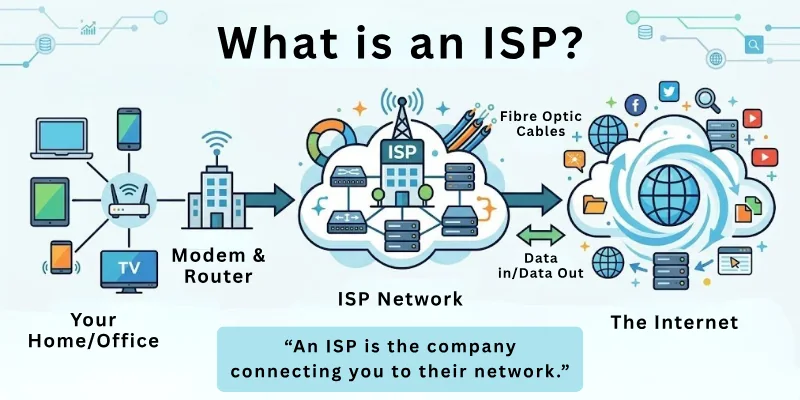
An ISP sets up the connection through cables, fiber, or mobile networks. It also affects how fast and reliable the internet is, depending on the plan you choose. In short, it is the service that connects you to the internet.
List of ISPs in Pakistan
Pakistan has several internet service providers that offer different types of connections. Some focus on fiber internet, while others provide mobile or wireless services. Availability varies by city and area. Each provider offers different speeds, coverage, and pricing options.
These are the internet providers in Pakistan:
1. Major Fixed Broadband ISPs
- PTCL
- Nayatel
- StormFiber
- Transworld Home
- Fiberlink
- Optix
- WorldCall
- Wateen Telecom
- Wi-Tribe
- Satcomm
2. Mobile Network ISPs
- Jazz
- Zong
- Ufone
- Telenor
- Onic
3. Corporate/Enterprise ISPs
- Cybernet
- Multinet
- Supernet
- Nexlinx
- Ebone Network
- Wancom
- Linkdotnet
- National Telecommunication Corporation (NTC)
4. Additional Licensed/Regional ISPs
- Brain Net
- COMSATS Internet Services (CIS)
- Micronet Broadband
- Telecard Limited
- Redtone Pakistan
- Dancom Pakistan
- Inbox Business Technologies (network services)
- Haseeb Waqas Telecom Division
5. Local & Small ISPs
- Local Cable Net Providers
- Wireless Tower ISPs
- Housing Society Internet Providers
- Small Fiber Operators
Disclaimer: This guide focuses on major ISPs in Pakistan. Availability and smaller regional providers may vary by area.
Let’s go over the details of each internet provider.
Fixed Broadband ISPs
They provide internet through physical lines connected to homes and offices. These connections stay stable and work well for regular use. They provide better speed and a reliable internet connection.
1. PTCL
PTCL is a major internet service provider in Pakistan, delivering broadband services to homes and businesses. It uses fixed-line and fiber connections to provide internet access in many areas of the country.
- Provides internet through DSL and fiber connections for different user needs
- Covers a wide network across cities and small towns in Pakistan
- Offers internet, along with phone and TV bundle services in some areas
- Works with a fixed-line system that connects directly to homes and offices
Pricing and Packages
- Basic and mid-range plans cost around PKR 2,000 to 5,000 per month
- High-speed fiber plans cost around PKR 6,000 to 10,000+ per month
- Bundle packages and installation charges may increase the total monthly cost based on selected services and location
Benefits of PTCL
- Available in most parts of the country, including remote areas
- Provides budget-friendly internet options for different users
- Easy setup process with local installation support
- Offers combined services that reduce the overall monthly cost
Drawbacks of PTCL
- Internet speed can change depending on the area and line quality
- Customer service response may take longer in some cases
- Performance is not always consistent during peak usage hours
- DSL connections are slower compared to modern fiber providers
2. Nayatel
Nayatel is a premium fiber internet provider in Pakistan, focusing on high-quality internet services for homes and businesses. It mainly operates in selected cities and is known for its strong fiber network and customer service.
- Provides pure fiber optic internet with high-speed connection
- Works on its own network system for better control
- Offers internet plans for home and business users
- Includes add-on services like TV and security solutions in some areas
- Focuses on urban regions with a modern network setup
Pricing and Packages
- Basic home plans start around PKR 2,500 to 3,500 per month
- Mid-range packages cost around PKR 4,000 to 6,000 per month
- High-speed plans can go above PKR 7,000 per month
Pros of Nayatel
- Delivers a very fast and smooth internet experience
- Provides a strong and stable fiber connection
- Offers quick customer support response in most cases
- Maintains good service quality in covered areas
Cons of Nayatel
- Available only in selected cities
- The monthly cost is higher than that of basic providers
- Installation is limited to coverage zones
- Not suitable for users outside service areas
3. StormFiber
StormFiber is a fiber internet service that focuses on fast and reliable home connectivity in selected cities in Pakistan. It mainly serves urban areas and offers modern internet solutions for digital needs.
- Provides fiber optic internet with high-speed data transfer
- Uses an advanced network system for better service control
- Offers internet plans designed for home users and families
- Includes optional TV and phone services in some packages
- Focuses on urban areas with a strong network setup
Pricing and Packages
- A basic internet plan begins at PKR 2,000 to 3,000 per month
- Mid-range plans cost around PKR 3,500 to 5,500 per month
- High-speed packages can cost more than PKR 6,000 per month
Advantages of StormFiber
- Provides fast and uninterrupted internet access
- Delivers good value for fiber internet users
- Works well for streaming and online meetings
- Maintains good connections in covered areas
Disadvantages of StormFiber
- Available only in a limited number of cities
- Installation depends on area coverage
- Service may not reach smaller towns
- Occasional maintenance can affect usage
- Not suitable for users outside urban regions
4. Transworld Home
Transworld Home is a fiber-based internet provider in Pakistan that focuses on high-speed connectivity with strong international bandwidth.
- Provides fiber internet with strong international connectivity
- Uses submarine cable network for better global access
- Offers high-speed plans for home and office use
- Focuses on selected urban service areas
Pricing and Packages
- Basic plans cost from PKR 2,500 to 3,500 per month
- Mid-range packages cost around PKR 4,000 to 6,000 per month
- Other packages may exceed PKR 7,000 per month
Pros of Transworld Home
- Provides a strong international browsing speed
- Delivers a stable fiber internet connection
- Works well for remote work and streaming
- Maintains consistent speed in covered areas
Cons of Transworld Home
- Limited availability in major cities only
- Installation depends on service coverage
- It costs more per month than other providers
- Not suitable for rural or small towns
5. Fiberlink
Fiberlink is a fiber internet provider in Pakistan that offers high-speed internet services mainly in major cities. It focuses on providing fast connectivity for home and business users.
- Provides fiber optic internet for fast data usage
- Uses a modern network system for internet delivery
- Offers packages for home and office users
- Available in selected urban locations
Pricing and Packages
- Basic plans start around PKR 2,000 to 3,000 per month
- Mid-level plans cost around PKR 3,500 to 5,000 a month
- Higher plans go above PKR 6,000
Merits of Fiberlink
- Delivers fast download and upload speeds for daily use
- Handles video streaming without frequent buffering
- Supports multiple devices at the same time
Demerits of Fiberlink
- Service is limited to major cities only
- Installation depends on area availability
- Network expansion is still in progress
- Not available in rural regions
6. Optix
Optix provides fiber internet services in selected cities in Pakistan. It delivers home broadband through fiber-to-the-home (FTTH) lines. The company also bundles internet, TV, and phone services for residential users.
- Uses fiber optic lines for internet delivery
- Provides internet, TV, and phone in one connection
- Installs a dedicated optical network terminal at home
- Runs a mobile app for account and bill management
- Focuses on residential areas in major cities
Pricing and Packages
- 30 Mbps plan around PKR 3,000 to 4,000 per month
- 50 Mbps plan around PKR 4,000 to 6,000 per month
- 75 Mbps plan around PKR 5,000 to 7,000 per month
- 100 Mbps plan around PKR 6,000 to 10,000 per month
- Installation charges apply to most new connections
Advantages of Optix
- Gives stable speed in covered areas
- Provides bundled TV and phone service
- Supports high-speed fiber internet
- Allows multiple devices on one connection
Challenges of Optix
- Works in limited areas only
- Charges high installation fees in some cases
- Depends on the area coverage quality
- Sometimes, the service faces downtime due to faults
7. WorldCall
WorldCall operates as a telecom and multimedia company in Pakistan. It provides internet through fiber, cable, and hybrid systems. It also delivers TV services and digital communication solutions.
- Offers cable broadband in some regions
- Includes digital TV services with internet plans
- Uses GPON fiber technology in selected areas only
- Runs both residential and commercial services
Pricing and Packages
- Fiber plans start around PKR 3,000 per month
- Mid-range plans fall between PKR 4,000 and 6,000
- PKR 6,000 per month for higher speed plans
- Cable broadband plans vary by location
- Installation cost depends on the city and setup type
Strengths of Worldcall
- Provides multiple service types in one company
- Gives fiber and cable options
- Allows unlimited data in many plans
- Supports TV and internet bundles
Problems of Worldcall
- Shows uneven speed in different areas
- Depends on the quality of network facilities in the area
- Faces customer service delays in some regions
- It has weaker coverage compared to the top ISPs
8. Wateen Telecom
Wateen Telecom is a telecom and internet provider in Pakistan. It works on fiber optic networks and long-distance communication systems. It serves both home users and corporate clients.
- Runs the main internet fiber network
- Provides internet for homes and businesses
- Offers leased line and data connectivity services
- Connects different cities through fiber routes
- Operates a large-scale telecom infrastructure
Pricing and Packages
- Home internet starts around PKR 3,000 to 5,000 per month
- Business plans cost more based on bandwidth
- Leased line services use custom pricing
- Installation cost varies by area
Perks of Wateen Telecom
- Covers long-distance fiber networks
- Provides strong business internet solutions
- Supports large data transfers
- Serves both the private and public sectors
- Offers dedicated internet lines for companies
Downsides of Wateen Telecom
- Does not cover all residential areas
- Focuses more on business clients
- Shows inconsistent home-user availability
- Depends on infrastructure zones for service
- It has a limited customer presence in small cities
9. Wi-Tribe
Wi-Tribe runs a wireless broadband service in Pakistan. It uses LTE technology to provide home internet without fiber cables. It mainly serves urban areas and offers plug-and-play devices for quick setup.
- Delivers internet through an LTE wireless network
- Uses a router device for home connection
- Provides unlimited data in selected plans
- Supports multiple devices at the same time
- Offers quick installation without digging or wiring
Pricing and Packages
- Basic home plan starts from around PKR 2,500 to 3,500 per month
- Mid-range plans are priced at PKR 3,500-5,000 per month
- Higher speed packages above PKR 5,000 per month
- Device charges apply at the time of setup
Advantages of Wi-Tribe
- It starts service without fiber cables
- Installs the connection quickly
- Works in areas without fiber coverage
- Allows easy relocation of the device
Disadvantages of Wi-Tribe
- Depends on the signal strength in the area
- Shows speed drops during peak hours
- It covers limited regions
- Performs weaker than fiber internet
- Requires a strong indoor signal placement
10. Satcomm
Satcomm provides internet services in Pakistan. It delivers fiber and wireless internet for homes and businesses in selected cities. It mainly serves urban areas with network solutions for residential and commercial users.
- Offers multiple internet speed options
- Delivers a stable connection in covered areas
- Uses a fiber-based network for data transfer
- Sets up connections for offices and enterprises
Pricing and Packages
- Entry-level home internet plans cost around PKR 2,000–3,000 per month
- Standard packages fall in the range of PKR 3,000 to 4,500 per month
- High-speed or premium plans can go above PKR 4,500 per month
- One-time installation and equipment charges are typically required at setup
Pros of Satcomm
- Provides stable fiber internet in covered areas
- Delivers fast speeds in metro cities
- Offers business-focused internet plans
- Works well in commercial business areas
Cons of Satcomm
- Does not serve most rural regions
- Availability changes from area to area
- Installation depends on local network access
- Not as widely available as top national ISPs
Mobile Network ISPs
Mobile network internet providers deliver internet through cellular signals instead of wired connections. These services work through SIM cards and can be used on phones, routers, and other devices. They are widely used across Pakistan due to easy access and portability.
1. Jazz
Jazz is one of the largest mobile internet providers in Pakistan. It offers 4G internet services across most cities and towns. Many users choose it for mobile data, hotspot use, and wide coverage.
- Provides 4G internet across Pakistan
- Offers daily, weekly, and monthly data bundles
- Works on smartphones and mobile devices
- Supports hotspot use for multiple devices
Pricing and Packages
- Daily bundles start from around PKR 25 to 50 for short data use
- Weekly packages cost around PKR 200 to 400
- Monthly internet plans range from PKR 800 to 2,500+
- Special bundles include WhatsApp, YouTube, and social media offers
Good Points of Jazz
- Covers most cities and highways in Pakistan
- Gives strong internet access in many urban areas
- Offers flexible package options for different needs
- Provides large data bundles for long use periods
Bad Points of Jazz
- Packages cost more than some other networks
- Speed changes in crowded network areas
- Data usage finishes quickly in heavy streaming
- Rural areas may get weaker signal coverage
- Some bundles include limited app-based usage
2. Zong
Zong is a mobile network in Pakistan that focuses on internet data services. It is widely used for mobile browsing, streaming, and large data packages.
- Provides 4G internet in most regions of Pakistan
- Offers large data bundles for heavy internet use
- Includes gaming, video, and social media packages
- Works on smartphones and mobile hotspots
- Gives multiple bundle choices for different users
Pricing and Packages
- Daily internet offers start at PKR 25 to 60
- Weekly data bundles vary from PKR 200 to 500
- Monthly packages span PKR 650 to 5,800
Advantages of Zong
- Gives large data limits in many packages
- Works well in most urban locations
- Offers budget-friendly heavy data plans
Limitations of Zong
- Signal strength changes by location
- Internet speed drops in crowded areas
- Rural coverage is weaker in some regions
- Heavy usage reduces data quickly
- Service quality differs between cities
3. Ufone
Ufone is a mobile network that provides internet through 4G services. It is used in many cities and towns for internet access in Pakistan on mobile devices.
- Provides 4G internet service across many areas
- Offers daily, weekly, and monthly data bundles
- Works on smartphones and mobile hotspots
- Gives different package options for users
Pricing and Packages
- Daily bundles start from around PKR 20 to 50
- Weekly packages cost around PKR 150 to 350
- Monthly plans range from PKR 700 to 2,000+
Upsides of Ufone
- Covers many urban and semi-urban areas
- Offers low-cost internet bundles
- Gives easy-to-activate package options
Downsides of Ufone
- Internet speed changes by location
- Coverage is limited in some rural areas
- Data finishes quickly in longer use
- Network quality differs between cities
- Some packages offer small data limits
4. Telenor
Telenor Pakistan is a mobile internet provider that offers 4G services across the country. It is widely used for mobile data access in both cities and smaller towns.
- Provides 4G internet in many regions
- Offers multiple prepaid and postpaid bundles
- Works on smartphones and portable devices
- Includes social and messaging packages
- Gives different data options for users
Pricing and Packages
- Daily internet plans begin at PKR 20 to 60
- Weekly bundles are priced around PKR 150 to 400
- Monthly plans vary from PKR 600 to 2,500+
Benefits of Telenor
- Works in many cities and towns across Pakistan
- Offers affordable internet packages
- Provides a simple package activation process
Limitations of Telenor
- Internet speed changes based on signal strength
- Network quality differs between regions
- Data limits are lower in some packages
- Service depends on local tower availability
5. Onic
Onic is a digital mobile operator in Pakistan that works fully through an app-based system. It does not depend on physical shops for most services. It targets users who want simple and online mobile control.
- Provides a digital SIM (eSIM and physical SIM support in some cases)
- Manages all services through a mobile app
- Offers online SIM activation and setup
- Supports data, calls, and SMS services
- Gives users full control of usage through the app
Packages and Pricing
- Basic packages start from around PKR 1,500–2,000
- Mid-range bundles typically cost PKR 2,000 to 3,000
- Heavy-usage plans are available above PKR 3,000
Pros of Onic
- Include easy online SIM activation
- Let users control everything from a mobile app
- Offers simple and clear package options
- Removes the need to visit physical stores
- Supports fast digital onboarding
Cons of Onic
- It has limited coverage in some areas
- Depends on a strong internet connection for app use
- Works better in urban cities than in rural areas
- May not suit users who prefer traditional support centers
Corporate/Enterprise ISPs
Corporate and enterprise ISPs provide internet and network services mainly for offices, businesses, and large organizations. These providers focus on stable connections, data security, and high performance.
- Cybernet: Offers reliable internet and data services for businesses across Pakistan.
- Multinet: Delivers secure network solutions and internet services mainly for corporate clients.
- Supernet: Provides internet and communication services for enterprises and government sectors.
- Nexlinx: Supplies high-speed internet and network solutions for businesses and institutions.
- Ebone Network: Runs internet and connectivity services focused on corporate users.
- Wancom: Manages internet and communication services for organizations.
- Linkdotnet: Offers internet and data services for business and enterprise needs.
- National Telecommunication Corporation (NTC): Provides secure internet and telecom services mainly for government departments.
Additional Licensed/Regional ISPs
Additional licensed and regional ISPs provide internet and communication services across different cities and sectors in Pakistan. These providers focus on specific regions, institutions, or business clients.
- Brain Net: Mainly serves corporate and institutional users with internet and networking solutions.
- COMSATS Internet Services (CIS): Focuses on connectivity services for educational and research institutions.
- Micronet Broadband: Works with residential and business users for broadband internet access.
- Telecard Limited: Operates in telecom services along with data connectivity solutions.
- Redtone Pakistan: Specializes in managed communication and network services for businesses.
- Dancom Pakistan: Supports corporate and enterprise clients with internet and communication solutions.
- Inbox Business Technologies (network services): Works on IT infrastructure and network solutions for organizations.
- Haseeb Waqas Telecom Division: Serves industrial and corporate sectors with telecom and connectivity services.
Local & Small ISPs
Most top ISPs in Pakistan fall under this category. These providers usually operate in specific cities, towns, or local areas and serve limited regions.
- Local Cable Net Providers: Mainly serve nearby areas using cable-based internet connections.
- Wireless Tower ISPs: Use wireless towers to provide internet services in different local regions.
- Housing Society Internet Providers: Offer internet services within residential societies and housing communities.
- Small Fiber Operators: Provide fiber internet on a small scale in selected neighborhoods or areas.
Comparison of Internet Providers in Pakistan
Below is a simple comparison of major internet providers in Pakistan. It helps show how each service differs.
| Provider | Type | Coverage | Speed Range | Best For |
| PTCL | Fixed + Fiber + DSL | Nationwide (wide reach) | Low to medium | Home use, rural areas |
| Nayatel | Fiber (FTTH) | Limited cities | High | Gaming, streaming, and office work |
| StormFiber | Fiber (FTTH) | Major cities | High | Home internet, streaming |
| Transworld Home | Fiber | Selected cities | High (strong global speed) | International browsing, remote work |
| Fiberlink | Fiber | Urban areas | Medium to high | Heavy downloading |
| Optix | Fiber | Limited cities | Medium to high | Home internet and streaming |
| Worldcall | Cable + Fiber (limited areas) | Selected cities | Low to medium | Basic browsing and TV bundles |
| Wateen Telecom | Wireless + Fiber | Multiple cities | Low to high | Business and corporate use |
| Wi-Tribe | Wireless broadband | Limited cities | Medium | Home internet without fiber |
| Satcomm | Satellite + Fiber (limited) | Very limited areas | Low to medium | Remote locations and special use |
| Jazz | Mobile 4G/5G | Nationwide (signal-based) | Low to high | Mobile users and hotspot use |
| Zong | Mobile 4G/5G | Nationwide | Medium to high | Streaming, mobile internet |
| Ufone | Mobile 4G | Wide coverage | Low to medium | Browsing, messaging |
| Telenor Pakistan | Mobile 4G | Wide coverage | Low to medium | Everyday internet use |
| Onic | Digital mobile operator | Limited (urban areas) | Medium to high | Online users, digital SIM users |
Key Differences of ISPs in Pakistan
Each internet provider works differently based on its technology and service areas. These points help compare internet services easily.
- Fiber gives faster internet than mobile networks
- PTCL covers most areas, but speed varies by location
- Nayatel and StormFiber give better speeds in cities
- Transworld focuses more on international browsing quality
- Mobile networks work anywhere, but depend on signal strength
Best Choice of Pakistani ISPs by Use
Different internet services suit different needs. The right option depends on how the internet is used.
- For gaming and work: Nayatel or StormFiber
- For rural areas: PTCL
- For travel and mobile use: Jazz or Zong
- For international work: Transworld Home
Factors to Consider When Choosing an ISP in Pakistan
Internet service varies across Pakistan, so the right choice depends on location and daily use. Some areas get strong fiber connections while others rely on mobile networks.
A good internet access provider should match both usage needs and budget. Careful selection helps avoid slow internet and repeated connection issues. The following are the factors to consider:
1. Coverage Area
Internet service is not the same everywhere. Some places have better coverage, and some places have weak or no service.
- Check if the service works in your area
- Some broadband providers in Pakistan work only in cities
- Rural areas often have limited options
2. Internet Speed
Internet speed depends on the package type and local network conditions. It affects how quickly online tasks run.
- Compare speed plans before selection
- Higher speed helps with heavy online use
- Speed can change depending on the location quality
3. Monthly Cost
Pricing differs across providers and packages. Some plans include extra service charges.
- Compare prices of different providers
- Some plans include extra charges
- Choose a plan based on usage needs
4. Connection Type
Different technologies deliver the internet in different ways. Each type works with its own system.
- Fiber gives a faster wired connection
- Mobile internet works on signals
- Wireless options suit limited areas
5. Service Availability
Not every provider works in all locations. Installation depends on the network reach in the area.
- Some providers cover selected regions
- Installation depends on area approval
- Not all packages work in every place
Types of Internet Connections in Pakistan
Internet use in Pakistan keeps growing every year. Different areas use different technologies based on speed, coverage, and cost. Some connections work best in cities, while others help in remote areas.
Here are the main internet connection types used in Pakistan:
- DSL connection: DSL uses telephone lines to provide internet at home. It costs less, but speed can drop if you live far from the exchange.
- Fiber optic connection: Fiber optic uses special cables to send data as light signals. It gives very fast and stable internet.
- Cable connection: It runs through TV cables and offers better speed than DSL. It works well in cities where cable networks already exist.
- Cellular connection (3G, 4G, 5G): This connection uses SIM networks on phones or devices. It is widely available, but speed depends on signal strength.
- Wireless/fixed wireless connection: This type uses radio signals from towers to connect homes. It works in areas where cables are not available.
- Satellite connection: A satellite uses signals from space to provide internet. It works in remote areas but costs more and gives a slower response time.
Internet Speed in Pakistan
Internet speed varies across providers and locations. Urban areas usually get faster fiber connections, while rural areas depend more on mobile networks. Speed also changes based on network load and package type.
- Fiber internet speed: Fiber providers like Nayatel and StormFiber offer speeds from around 20 Mbps to 300 Mbps in selected cities.
- PTCL speed range: PTCL provides DSL and fiber plans ranging from low speeds up to around 250 Mbps in covered areas.
- Mobile internet speed: Mobile networks like Jazz and Zong offer 4G speeds that change based on signal strength and network load.
- Rural area speed: Mobile internet is the main option in rural areas, and speed stays lower in weak coverage zones.
- Peak hour speed changes: Internet speed drops in evening hours when more users are active on the network in most areas.
Challenges of the Internet in Pakistan
Internet service in Pakistan has improved in many areas, but users still face several problems. These challenges depend on location, network setup, and usage load. Rural and urban areas both experience different types of issues.
Here are the key challenges:
- Limited access in rural areas: Many rural areas still do not have proper internet access.
- Speed changes by location: Internet speed changes based on location and network quality.
- Slow internet during busy hours: The internet becomes slow when many users connect at the same time.
- Service breaks during maintenance: Some users face short service breaks during maintenance work.
- High cost of fast internet: High-speed internet plans cost more for most users.
- Weak network setup: Some areas still lack proper fiber network coverage.
Conclusion
Through this blog, we become familiar with the major internet service providers in Pakistan, their features, pricing, advantages, limitations, and how internet speed and experience change across cities, towns, and rural areas.
Internet options in Pakistan vary widely from basic mobile data to advanced fiber connections. Some providers focus on wide coverage, while others focus on faster connections in selected cities. The right choice depends on location, usage needs, and budget, so each option has its own value.
FAQs are included at the end, so make sure to check them as well.
FAQs
These frequently asked questions explain the most common queries about internet service providers in Pakistan.
Pakistan has many internet providers, but the exact number keeps changing as new companies enter the market. Around 10 to 15 internet companies in Pakistan are active, including both fiber and mobile networks. Many small local providers also work in specific cities or housing societies.
Private companies and telecom operators provide internet in Pakistan. Major mobile networks and fiber companies handle most of the services.
- Mobile internet providers include Jazz, Zong, Ufone, and Telenor Pakistan.
- Fiber internet providers include PTCL, Nayatel, StormFiber, Transworld, and Fiberlink.
- These companies connect users through mobile towers, fiber cables, and DSL lines.
Starting an internet service provider business in Pakistan requires legal approval and technical setup. The process includes registration with the Pakistan Telecommunication Authority (PTA) and obtaining a license. After approval, equipment such as fiber cables, routers, and servers is required.
Pakistan has improved its internet service in recent years, especially in major cities. Fiber internet in urban areas gives faster speeds. Mobile internet also works in most regions, but the quality varies by area. Rural areas still face limited coverage in some locations.
The best internet service depends on how and where it is used. Each provider offers different strengths for different needs.
- For home fiber use in cities, Nayatel and StormFiber work well.
- For wider coverage, PTCL is available in many areas.
- For mobile internet, Jazz and Zong are common choices.
Internet packages in Pakistan come with fixed data limits or unlimited usage plans. Users choose packages based on their monthly needs and budget. Each package has a different price determined by data limits and service type.
Location plays a major role in internet quality across Pakistan. Areas close to strong network setups usually get better results. Weather conditions and network load can also change the experience.
Internet speed changes because each provider uses a different network. The distance from the network equipment and the local usage load also affect speed. This is why service quality is not the same in every area of Pakistan.
Different cities have different network development. Large cities have more advanced systems compared to smaller towns. This creates differences in internet access and service options. Rural and remote areas face even more limited connectivity options.
Internet prices in Pakistan vary because providers offer different speed levels and data limits. Areas with strong fiber networks generally have higher package costs compared to basic mobile services. Installation charges and location also affect the final price in many cases.





- Be Respectful
- Stay Relevant
- Stay Positive
- True Feedback
- Encourage Discussion
- Avoid Spamming
- No Fake News
- Don't Copy-Paste
- No Personal Attacks
- Be Respectful
- Stay Relevant
- Stay Positive
- True Feedback
- Encourage Discussion
- Avoid Spamming
- No Fake News
- Don't Copy-Paste
- No Personal Attacks
